Why These Products Get Confused
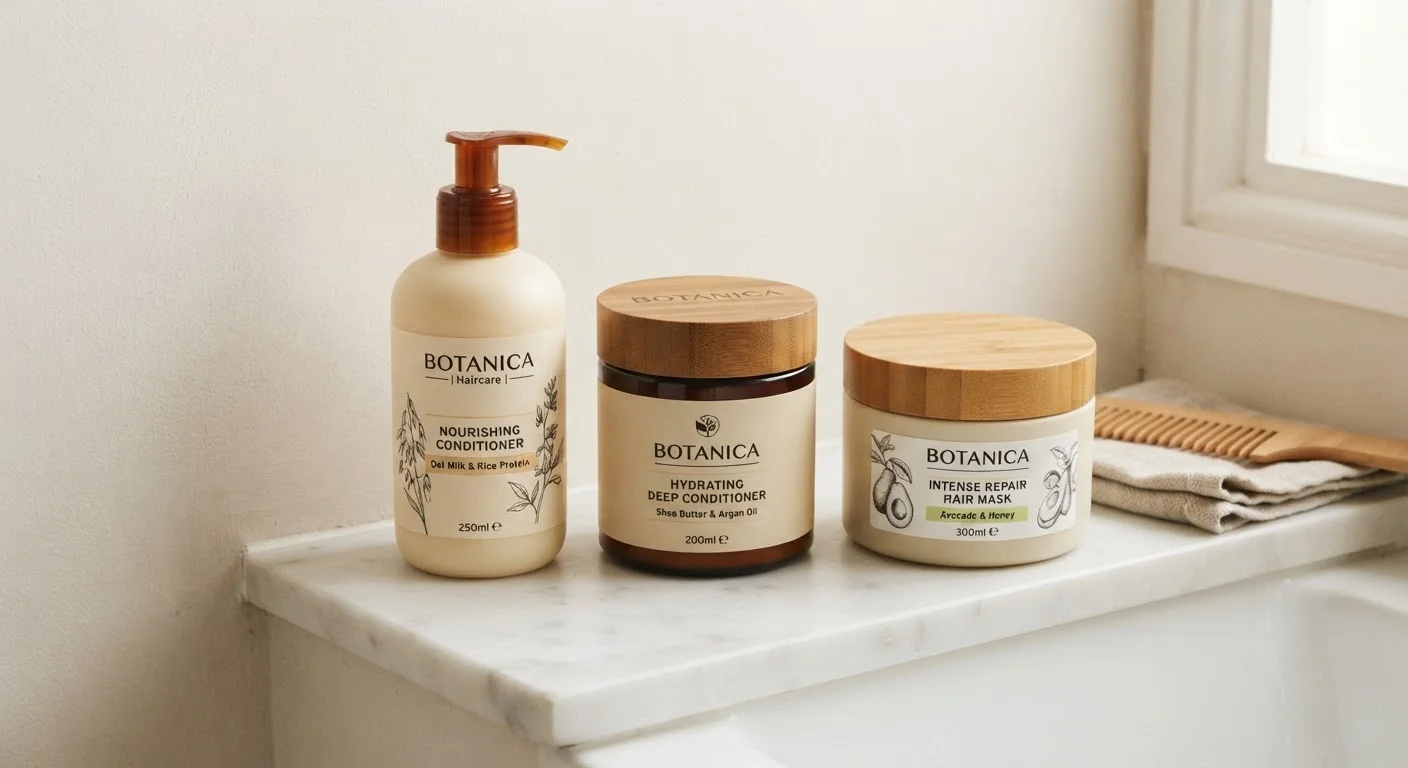
Walk down any hair care aisle and you'll find conditioners, deep conditioners, and hair masks sitting shoulder-to-shoulder - often with packaging that looks nearly identical. It's easy to assume they're doing the same job at different price points. They're not.
The core differences come down to three factors: ingredient concentration, how far into the hair shaft the product penetrates, and how long it needs to be left on to work. Getting clear on those three things makes it much easier to decide which product your hair needs and when.
If you're also thinking about how shampoo fits into this picture, see our guide on wash frequency for different hair types - because how often you wash directly affects how much conditioning your hair needs.
Regular Conditioner: Your Everyday Baseline
A rinse-out conditioner is designed for use after every shampoo. Its primary job is to smooth the cuticle - the outermost layer of the hair shaft - which shampoo temporarily roughens during cleansing. Smoothing the cuticle reduces friction, makes detangling easier, adds surface shine, and helps seal in moisture from the cleansing process.
Most everyday conditioners work mostly at the surface level and are formulated to rinse clean in a minute or two. Key ingredients often include cationic (positively charged) compounds like behentrimonium chloride, which bond temporarily to the negatively charged hair shaft, along with lightweight emollients and humectants. The result is manageable, softer hair without weighing it down.
Regular conditioner is not optional for most people - it's a foundational step. Skipping it consistently, especially if you shampoo frequently, can leave hair more prone to breakage and tangles over time.
Apply conditioner to mid-lengths and ends
The scalp produces its own natural oils, so concentrating conditioner there can lead to build-up and a greasy feel. Focus application from the mid-shaft to the ends, where the hair is oldest and most prone to dryness. This is especially important if you have fine or low-porosity hair.
Deep Conditioner: Going Below the Surface
Deep conditioners are formulated to penetrate beyond the cuticle and into the cortex - the inner structure of the hair shaft where much of its strength and elasticity lives. They typically contain higher concentrations of moisturizing agents, proteins, and penetrating oils, and they require heat or extended contact time (usually 5-30 minutes) to work effectively.
The extended application time allows ingredients like hydrolyzed proteins and fatty alcohols to diffuse into the hair more fully, temporarily reinforcing the internal structure and restoring moisture balance. This is why deep conditioning is particularly useful for hair that's dry, high-porosity, color-treated, or naturally coily - all situations where the cuticle is more open or irregular, allowing greater product uptake.
For most people, deep conditioning once a week or every other week is enough. Over-use - especially with protein-heavy formulas - can cause the opposite problem: hair that feels stiff or brittle. Curly hair care routines often build deep conditioning in as a non-negotiable weekly step, since coily textures tend to lose moisture more readily.
| Regular Conditioner | Deep Conditioner | Hair Mask | |
|---|---|---|---|
| Primary purpose | Smooth cuticle, ease detangling | Restore internal moisture and strength | Intensive repair of damage or dryness |
| Depth of penetration | Surface (cuticle layer) | Deeper (cortex) | Deepest (cortex and beyond) |
| Typical leave-on time | 1-3 minutes | 5-30 minutes | 20 minutes to overnight |
| Recommended frequency | Every wash | Weekly or bi-weekly | Monthly or as needed |
| Heat needed | No | Optional but helpful | Optional but helpful |
| Best suited for | All hair types | Dry, coily, or color-treated hair | Damaged, chemically processed hair |
Hair Mask: Intensive Treatment for Specific Concerns
Hair masks are the most concentrated of the three. While the line between a deep conditioner and a mask can blur depending on the product, masks are generally formulated to address specific, acute concerns - severe dryness, heat damage, chemical processing damage, or significant breakage. They often contain higher levels of emollient butters, bond-repairing actives, or reparative proteins.
Leave-on times for masks typically run longer than standard deep conditioners - sometimes 20 minutes to an hour, occasionally overnight for very dry hair. They're not meant for every wash. Using a mask once or twice a month is typical for healthy hair; more frequently for damaged or chemically treated hair, though it's worth reading the specific product guidance.
If your hair has experienced repeated heat styling, understanding what heat actually does to hair structure can help you decide whether a mask is the right intervention or whether other habits need to change first.
You can also learn how to decode hair product ingredient lists to better evaluate what any mask or treatment actually contains.
This article is for general informational purposes only and is not a substitute for professional advice from a licensed cosmetologist or dermatologist regarding your specific hair health concerns.