Why Skincare Myths Are So Sticky
Skincare myths spread because they often contain a grain of plausibility. Steam does feel like it's doing something. "Natural" sounds inherently safer than a chemical-sounding name. These half-truths travel quickly - through well-meaning friends, social media tutorials, and decades of marketing copy - and can take root even in people who approach their routines with genuine care.
The cost isn't trivial. Acting on inaccurate information can mean wasting money on ineffective products, inadvertently irritating your skin, or skipping steps that actually matter (like sunscreen). Before you build a routine from scratch, it helps to clear the foundation. You can also explore what a beginner routine actually needs once the myths are out of the way.
Myth
Steam opens your pores, making cleansing more effective.
Fact
Pores are not muscles and cannot open or close. Steam may soften sebum and loosen surface debris, but it does not alter pore size.
The idea that pores have a door-like mechanism is anatomically incorrect. Pore size is largely determined by genetics and how much sebum is present. What steam can do is temporarily soften the material inside a clogged pore, which may make extraction slightly easier - but it's a mechanical effect, not a structural one. Cold water afterward doesn't "close" them either.
Myth
Natural or plant-based ingredients are always gentler and safer than synthetic ones.
Fact
The source of an ingredient - natural or synthetic - does not determine its safety or irritation potential. Many potent allergens and irritants are plant-derived.
Poison ivy is natural. So are many common contact allergens, including essential oils frequently found in "clean" beauty products. Synthetic ingredients, meanwhile, are often developed specifically to minimize irritation. Safety depends on the ingredient itself, its concentration, and how your individual skin responds - not whether it came from a plant or a lab.
Myth
If you have oily skin, you should skip moisturizer to avoid making it worse.
Fact
Skipping moisturizer can cause the skin to compensate by producing even more oil. Oily skin still benefits from lightweight, non-comedogenic hydration.
The skin's oil production (sebum) and its water content are separate systems. Dehydrated skin - even oily skin - can trigger increased sebum output as a compensatory response. A lightweight, gel-based moisturizer helps maintain the skin's water balance without adding occlusive heaviness. Choosing a non-comedogenic formula means it's formulated to avoid clogging pores. Hyaluronic acid is a commonly cited hydrating ingredient worth understanding clearly before relying on it.
Myth
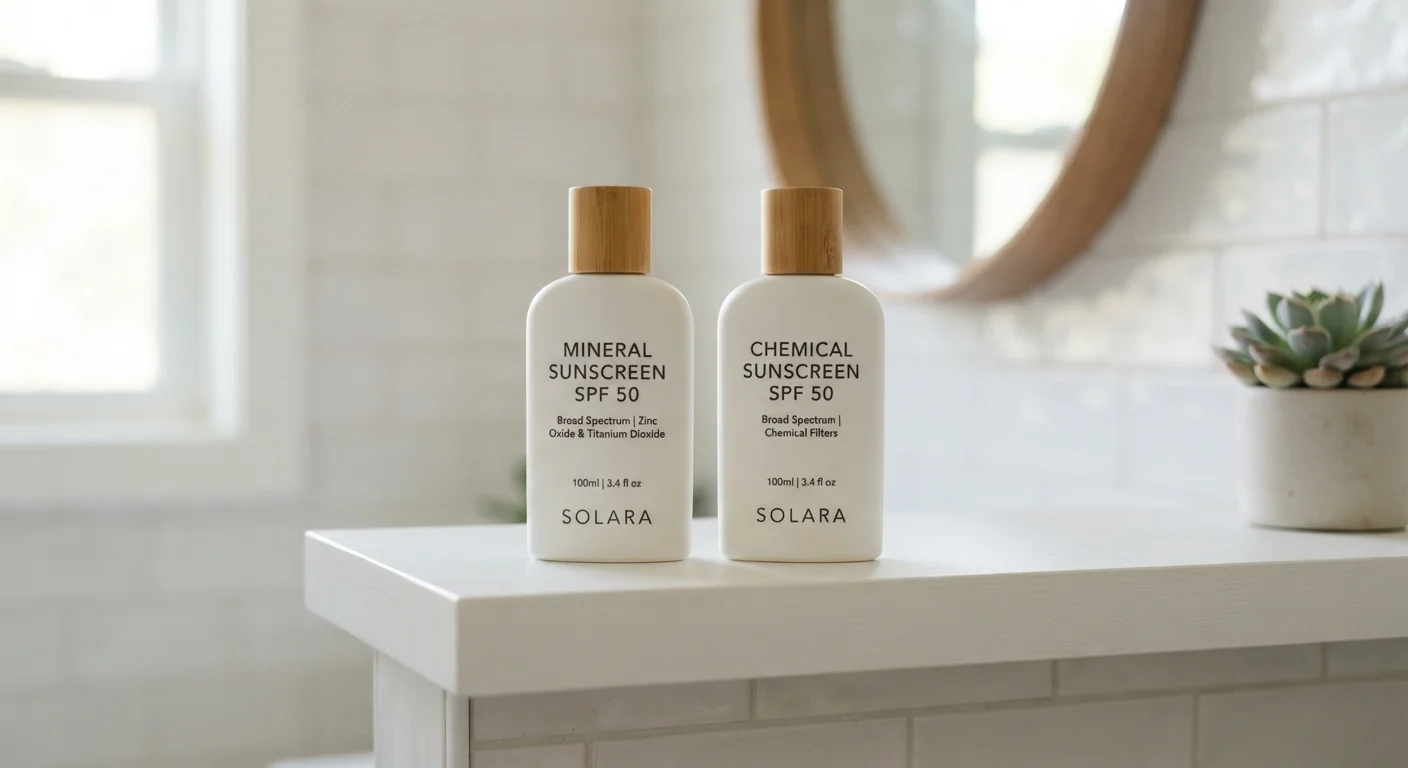
SPF 50 offers dramatically more protection than SPF 30.
Fact
SPF 30 blocks roughly 97% of UVB rays; SPF 50 blocks about 98%. The difference is smaller than most people expect - but daily application matters far more than the number.
SPF ratings measure protection against UVB rays (the ones associated with sunburn) under controlled lab conditions. The real-world gap between SPF 30 and SPF 50 is narrow, and neither provides meaningful protection if applied too thinly or not reapplied after extended sun exposure. Dermatologists broadly recommend SPF 30 or higher - used correctly - as the more consequential variable.
Myth
More expensive skincare products work better than drugstore options.
Fact
Price reflects marketing, packaging, and brand positioning - not necessarily ingredient quality or clinical efficacy.
Many high-performing active ingredients - such as niacinamide, glycolic acid, and retinol - appear in both drugstore and luxury lines. What matters is the concentration of the active ingredient, the formulation's stability, and whether it suits your skin type. Peer-reviewed research supports specific ingredients, not price points. That said, some formulation factors (like encapsulation technology or elegant textures) can justify some cost difference - so it's worth reading labels rather than assuming either extreme.
What the Evidence Actually Supports
Correcting a myth is only useful if you replace it with something actionable. A few evidence-grounded principles apply across almost every skin type and concern:
- Consistency outperforms complexity. A simple routine used daily delivers more benefit than an elaborate one used inconsistently. If you notice your routine has grown unwieldy, signs you're overcomplicating your skincare are worth recognizing early.
- Hydration and barrier support matter for everyone. Whether your skin is oily, dry, or combination, maintaining the skin barrier is a foundational goal. If moisturizer hasn't been working the way you expected, there may be formulation or application factors at play.
- Ingredient research is more reliable than price or marketing. Look for products with published evidence behind their key actives. Ingredients like niacinamide, retinoids, and broad-spectrum UV filters have substantial research support - regardless of which label they appear on.
Don't DIY Active Ingredients Without Research
Ingredients like retinoids, AHAs, and BHAs are effective - but concentration and frequency matter significantly. Starting too high or layering too many actives at once can damage the skin barrier, cause peeling, or increase photosensitivity. Introduce one new active at a time and allow your skin to adjust before adding another.
This article is for general informational purposes only and is not a substitute for professional dermatological advice. If you have persistent skin concerns, a qualified dermatologist can provide guidance tailored to your individual needs.