Why Attic Insulation Deserves More Attention
Most homeowners invest in visible upgrades - new countertops, updated fixtures, fresh paint. The attic rarely makes the list, yet it's one of the primary paths through which conditioned air escapes your home. Heat rises in winter and accumulates in summer, meaning the attic sits at the intersection of your biggest energy losses.
The U.S. Department of Energy estimates that a significant portion of home heating and cooling energy is lost through the ceiling and roof assembly - a problem that improved attic insulation can directly address. If your home was built before the 1980s, there's a reasonable chance the attic insulation doesn't meet current recommended levels. See our annual home maintenance checklist for other commonly missed areas worth evaluating.
~15%
Heat loss through an under-insulated ceiling
The U.S. Department of Energy estimates that ceiling and attic areas account for a notable share of total home heat loss in typical residential buildings.
90%
US homes estimated to be under-insulated
According to the North American Insulation Manufacturers Association, the vast majority of existing US homes do not meet current energy code insulation recommendations.
The Advantages of Upgrading Attic Insulation
Adding or improving attic insulation delivers benefits that ripple through the entire house - not just in the winter months.
Reduces heating and cooling energy consumption year-round
A well-insulated attic slows heat transfer in both directions - keeping warmth inside in winter and heat out in summer. This reduced load on your HVAC system can translate to meaningfully lower energy bills over time.
Improves whole-home comfort and temperature consistency
Rooms directly below the attic often feel too hot in summer or too cold in winter when insulation is inadequate. Better insulation smooths out those extremes and reduces the burden on your heating and cooling system to compensate.
Helps protect indoor air quality
Adequate insulation reduces the pressure differential that draws outdoor air - along with dust, pollen, and pollutants - into the living space through gaps and cracks. Fewer drafts generally means cleaner indoor air.
Relatively high return compared to many other upgrades
Industry data consistently places attic insulation among home improvements with stronger cost-benefit ratios, particularly in climates with significant heating or cooling seasons.
Can extend the lifespan of roofing and HVAC equipment
By moderating attic temperatures, insulation reduces ice damming risk in cold climates and eases the load on air conditioning equipment during hot weather - potentially prolonging the working life of both.
One often-overlooked benefit is moisture control. Proper insulation, when combined with adequate attic ventilation, helps prevent condensation from building up on structural components - which can otherwise lead to mold and wood rot over time.
The Drawbacks You Should Know About
Attic insulation isn't a simple, consequence-free upgrade. Several real-world trade-offs deserve honest consideration before you commit.
Upfront installation costs can be significant
Professional installation of blown-in or spray foam insulation across a full attic can run into the thousands of dollars depending on attic size and insulation type. DIY installation reduces cost but carries its own risks and limitations.
Older homes may have hazardous existing materials
Vermiculite insulation, common in homes built before 1990, may contain asbestos and must not be disturbed without professional testing and remediation. Knob-and-tube wiring also complicates insulation upgrades and requires an electrician's assessment.
Inadequate ventilation can create new moisture problems
Adding insulation without ensuring proper attic ventilation can trap moisture, leading to mold growth and structural damage. Insulation and ventilation need to be evaluated together, not independently.
DIY installation risks include health hazards
Fiberglass and mineral wool fibers can irritate skin, eyes, and lungs during handling. Proper protective gear - including respirators, goggles, and gloves - is essential and is sometimes underestimated by first-time installers.
Results vary based on air sealing and other factors
Insulation without air sealing often underperforms expectations because conditioned air continues to escape through gaps around pipes, wires, and fixtures. The full benefit requires addressing both issues together.
Check for Vermiculite Before You Start
Homes built before 1990 may contain vermiculite attic insulation, which has been associated with asbestos contamination. If you see gray, pebble-like granules in your attic, do not disturb them. Contact a certified asbestos inspector before doing any work. The EPA provides guidance on identifying and safely managing vermiculite insulation.
It's also worth understanding that insulation alone doesn't solve all energy inefficiency. Air sealing - closing gaps around pipes, ducts, and electrical penetrations - often needs to happen alongside insulation for the upgrade to perform as expected. Pairing insulation with a smart thermostat may help you monitor the results more precisely.
Understanding R-Values and Insulation Types
R-value measures thermal resistance - the higher the number, the more effective the insulation. The Department of Energy divides the US into climate zones and recommends different R-values for each. Attics in colder northern climates typically call for R-49 to R-60, while milder southern climates may require R-30 to R-49.
Common insulation types include:
- Fiberglass batts - widely available, DIY-friendly in accessible attics with standard joist spacing
- Blown-in cellulose - made largely from recycled paper, effective for irregular spaces and topping off existing insulation
- Spray foam - creates an air barrier as well as thermal resistance, but requires professional installation
- Mineral wool (rock wool) - fire-resistant and moisture-tolerant, useful in specific applications
Choosing the right type depends on your attic's geometry, existing conditions, and budget - not just the R-value target. For a broader look at home decisions that affect long-term value, see common myths about homeownership.
When to Call a Professional
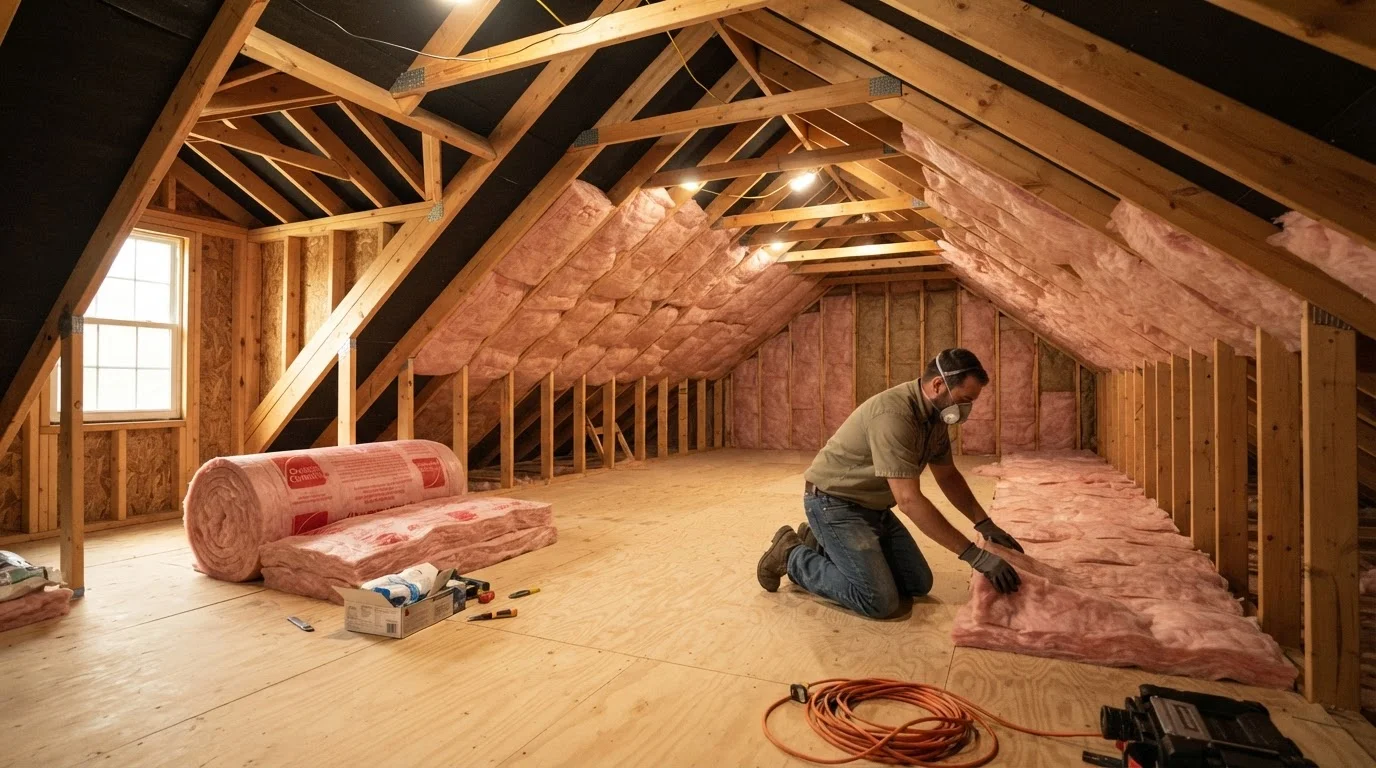
Some attic insulation work is within reach of a confident DIYer - rolling out fiberglass batts in a clean, accessible attic with good headroom, for example. But several situations call for a licensed contractor or specialist:
- Attics with knob-and-tube wiring, which can be a fire hazard when covered by insulation
- Presence of existing vermiculite insulation (which may contain asbestos - do not disturb without professional testing)
- Work involving spray foam or blown-in insulation at scale
- Any modifications near HVAC equipment, ducts, or flues
Permits may also be required depending on your municipality and the scope of work. Always check with your local building department before starting. The seasonal maintenance checklist can help you build attic evaluation into your regular home care routine.