What 'Refurbished' Actually Means
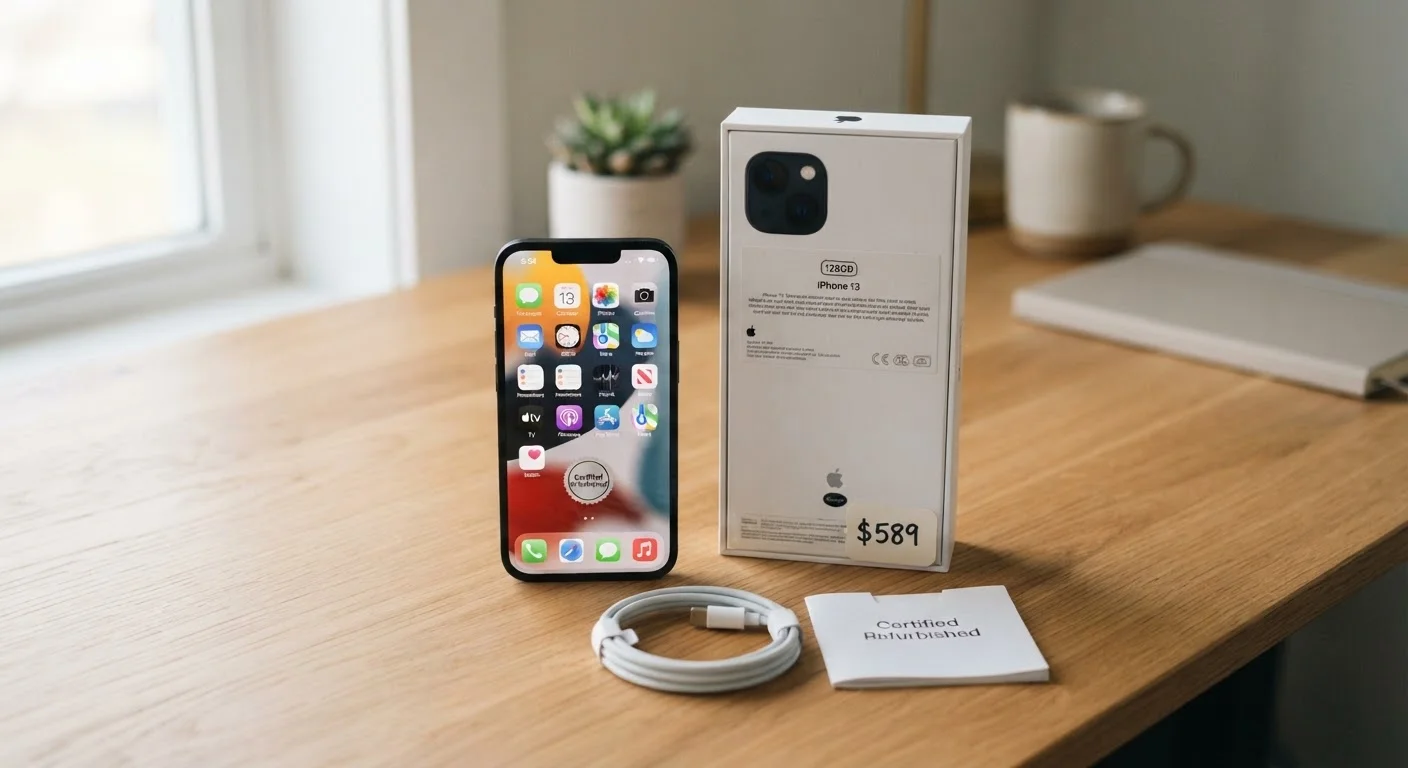
The word refurbished covers a wide spectrum. At one end, a device may have been opened, inspected, and resealed. At the other, it could have undergone full hardware replacement - screen, battery, casing, and internal components - before being tested and resold.
Sellers typically use a grading system to communicate condition: Grade A devices show minimal or no cosmetic wear; Grade B units may have light scratches; Grade C phones have visible scuffs or marks. These grades are not standardized across the industry, so a Grade A from one retailer may not equal a Grade A from another.
The most reliable category is manufacturer-certified refurbished - devices restored and tested by the original maker. These come with the strongest quality controls and are generally more comparable to a new purchase than third-party refurbished units. If you're evaluating a similar decision for other devices, the same logic applies - see our practical checklist for buying a refurbished computer for guidance that translates well to phones too.
Refurbished vs. Used: Not the Same Thing
A refurbished phone has gone through some level of inspection, testing, and often repair before resale. A used phone sold peer-to-peer - through a classified listing, for example - typically has not. The distinction matters for both reliability and recourse if something goes wrong. When evaluating any secondhand device, confirm whether it was professionally refurbished or simply a direct resale.
The Advantages Worth Considering
The most obvious draw of a refurbished phone is the price. Depending on the model and seller, buyers often find meaningful savings compared to the retail price of a new equivalent. For flagship-class devices, that gap can be substantial.
Lower upfront cost than buying new
Refurbished phones of the same model frequently sell for significantly less than their new-retail counterparts, making higher-end hardware more accessible to more buyers.
Access to premium hardware at reduced price
Buyers can often afford a more capable, higher-spec device in the refurbished market than they could purchasing new at the same budget.
Reduces electronic waste
Extending the usable life of an existing device keeps it out of the waste stream longer and offsets some of the environmental cost of original manufacture.
Manufacturer-certified options provide strong assurance
Certified refurbished programs from original manufacturers typically include rigorous testing and quality controls that make these devices close to new in performance.
Beyond cost, choosing refurbished also reduces electronic waste. Phones contain rare materials and create significant manufacturing emissions, so extending a device's useful life has a measurable environmental upside - even if that's not the primary motivation for most buyers.
~15-30%
Typical price discount vs. new equivalent
Industry observers commonly note refurbished smartphones sell at a 15-30% discount compared to current new-retail pricing, though the range varies by model age and seller.
~15%
Share of global smartphone sales that are refurbished
Market research firms have estimated that refurbished devices account for a growing share of total smartphone sales globally, reflecting increased consumer comfort with the category.
The Disadvantages You Shouldn't Overlook
Refurbished phones carry real risks that can erode the apparent savings. Warranty terms are the most common friction point. Many refurbished devices come with only a 90-day warranty, compared to the one year typically offered on new phones. Some third-party sellers offer even less.
Shorter, more limited warranty coverage
Refurbished devices often come with warranties of 90 days to one year, and coverage terms vary widely - some third-party sellers offer little to no protection.
Battery may have significant prior degradation
Unless the seller explicitly replaced the battery, a refurbished phone may arrive with reduced capacity, leading to shorter battery life than a new equivalent would deliver.
Grading standards are inconsistent across sellers
Without industry-wide standardization, cosmetic and functional grades mean different things depending on the retailer, making direct comparisons difficult.
Potentially shorter software support window
An older-generation device bought refurbished may be one or two years closer to the end of its OS update and security patch support timeline.
Risk of hidden defects not caught during refurbishment
Not all refurbishment processes are equally thorough, and some issues - intermittent hardware faults, speaker degradation, camera quirks - may not surface until after purchase.
Battery health is another critical concern. Smartphone batteries degrade with charge cycles, and a refurbished phone may arrive with a battery that's already lost a meaningful percentage of its original capacity - reducing screen-on time and overall performance. Always ask about the battery health percentage before purchasing, and check whether the seller replaced the battery as part of the refurbishment process.
Software support timelines are also worth factoring in. A refurbished phone from a prior generation may be closer to the end of its supported update window, meaning you could stop receiving security patches sooner than you'd expect.
How to Reduce the Risk
The single most important step is choosing where you buy. Manufacturer-certified programs, major carrier refurbishment programs, and reputable third-party platforms with transparent return policies all offer meaningfully lower risk than anonymous marketplace listings.
Before committing, confirm the following: the specific refurbishment grade, battery health status, warranty length and what it covers, return window, and whether the device is unlocked or carrier-locked. A locked phone limits your flexibility to switch carriers, which affects the long-term value of the purchase.
It's also worth comparing the refurbished price against the cost of the next-generation model - sometimes the gap narrows enough that newer hardware with a full warranty makes more practical sense. This kind of trade-off thinking applies across many consumer decisions; for example, the same approach used in weighing a new car versus a used car translates naturally here.