What Each Travel Style Actually Offers
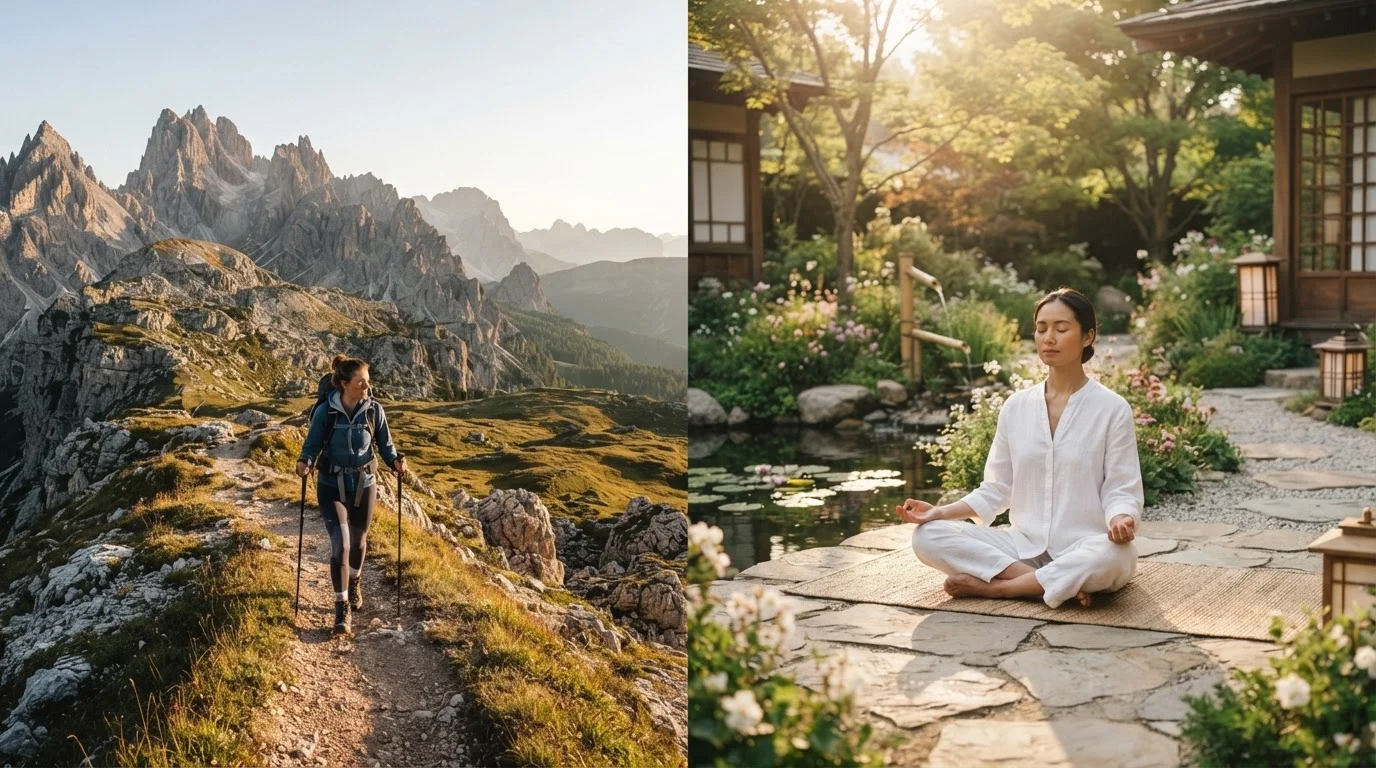
Adventure travel is built around physical engagement with the world - think trekking, kayaking, rock climbing, or multi-day backcountry routes. The draw is the combination of novelty, mild risk, and the satisfaction of completing something genuinely hard. It works as a reset because it demands full presence; it's difficult to ruminate when you're navigating a trail or reading river currents.
Wellness retreats take the opposite approach. Whether centered on yoga, meditation, thermal therapies, or nutritional reset programs, they create deliberately low-stimulation environments designed to support recovery. The structure - scheduled sessions, reduced digital access, guided reflection - removes decision fatigue and hands control to facilitators.
Both formats sit well outside standard tourism, and if you're curious about how they fit into the broader landscape of travel philosophies, our guide to travel styles is a useful reference point.
Key Differences at a Glance
Choosing between these two styles comes down to several practical and personal factors. The comparison below maps the most important dimensions side by side.
| Adventure Travel | Wellness Retreats | |
|---|---|---|
| Primary mechanism | Physical challenge and novelty | Rest, structure, and guided recovery |
| Typical energy level required | Moderate to high | Low to moderate |
| Level of scheduling | Flexible, self-directed | Structured, facilitator-led |
| Cost range | Budget to high (varies widely) | Mid to high (often all-inclusive) |
| Best for mental state | Restless, under-stimulated | Burned out, overstimulated |
| Post-trip physical state | Exhilarated but physically tired | Rested, possibly emotionally reflective |
| Solo-friendliness | Depends on activity type | Generally high - built-in community |
One dimension worth calling out separately: recovery type. Adventure travel generally demands physical recovery after the trip - your body may be tired even if your mind feels alive. Wellness retreats tend to leave you feeling physically rested but can occasionally surface emotional material that takes time to process. Neither outcome is negative, but it's worth factoring into your return-to-work timeline.
How to Read Your Own Signals
The most common planning mistake is choosing based on what sounds appealing in theory rather than what you actually need. A useful diagnostic: think about what depletes you most on a typical week. If it's physical inactivity, monotony, and the sense of being trapped indoors - adventure travel will likely feel restorative. If it's overstimulation, relentless scheduling, and the inability to slow down - a wellness retreat may deliver more lasting benefit.
Try the "Monday Morning" Test
Before booking, imagine yourself on a Monday morning two weeks from now, back at your desk. Would you feel more recharged having just climbed a mountain - or having spent five days in a quiet retreat with no agenda? That gut-level reaction is often more reliable than a pros-and-cons list. If you genuinely can't decide, a shorter trip in each style over consecutive years is a low-stakes way to gather real data about what actually works for you.
It's also worth acknowledging the role of physical readiness. Adventure itineraries vary enormously in intensity, but many assume a baseline fitness level and carry real injury risk if you're underprepared. Wellness retreats are generally more accessible across fitness levels, though some programs (intense yoga intensives, cold-water immersion protocols) have their own physical demands. Always review program specifics and, for anything health-adjacent, consult a qualified healthcare professional before committing.
For travelers uncertain about pacing and depth of experience, our comparison of slow travel vs. packed itineraries explores how schedule density affects the quality of a trip.
Cost, Logistics, and What to Expect
Adventure travel costs vary enormously - a weekend camping trip has a very different price tag than a guided expedition in a remote region. Budget largely tracks with remoteness, guide requirements, and gear needs. Independent adventure travel is significantly more accessible financially than fully guided experiences.
Wellness retreats tend to carry higher per-night costs than standard accommodation, especially for all-inclusive formats where meals, programming, and facilities are bundled. However, the structured environment can reduce incidental spending, and many travelers find the elimination of planning decisions is itself part of the value. Some retreat formats, including community-based or donation-model programs, exist at lower price points.
On the logistics side, adventure travel often requires more preparation: visa research, vaccination checks, travel insurance review, and gear planning. Wellness retreats typically handle more of the experience logistics for you, though entry requirements for international destinations still apply. Always verify visa, health, and safety requirements directly with official government and provider sources - conditions change and no third-party article can substitute for current official guidance.
If you're drawn to formats that sit somewhere between these two poles, under-explored travel formats covers hybrid and alternative structures worth knowing about. And for the practical planning side of any trip, our trip planning hub is a good place to start organizing the details.
Don't Book Beyond Your Current Fitness Level
Adventure travel itineraries are frequently marketed with aspirational language that can obscure genuine physical demands. A multiday trekking route at altitude is a fundamentally different experience depending on your baseline conditioning - and pushing beyond it in a remote location carries real risk. Read operator difficulty ratings carefully, ask specific questions about daily mileage and elevation gain, and give yourself honest answers about where you are physically right now, not where you plan to be.