Why Depreciation Is the Cost Most Owners Underestimate
When drivers think about the cost of owning a vehicle, they tend to focus on monthly loan payments, insurance premiums, and fill-ups at the pump. Depreciation rarely makes the mental list - yet industry data consistently shows it accounts for the largest single slice of total ownership cost for most US drivers.
Unlike fuel or insurance, depreciation doesn't generate a bill. It works silently: the gap between what you paid and what the vehicle is worth today grows every month. For budget-conscious consumers, understanding this mechanism is essential for making sound vehicle decisions. See our full breakdown of car ownership costs to understand how depreciation fits alongside every other expense.
~20%
Value lost in the first year of ownership
Industry estimates consistently show new vehicles lose approximately 15-20% of purchase price within 12 months, according to automotive valuation research.
50-60%
Cumulative value lost after five years
Over a typical five-year ownership period, most vehicles lose between half and three-fifths of their original value to depreciation.
#1
Largest single component of total ownership cost
According to AAA's annual Your Driving Costs study, depreciation consistently ranks as the single largest expense for new vehicle owners.
How Depreciation Actually Works
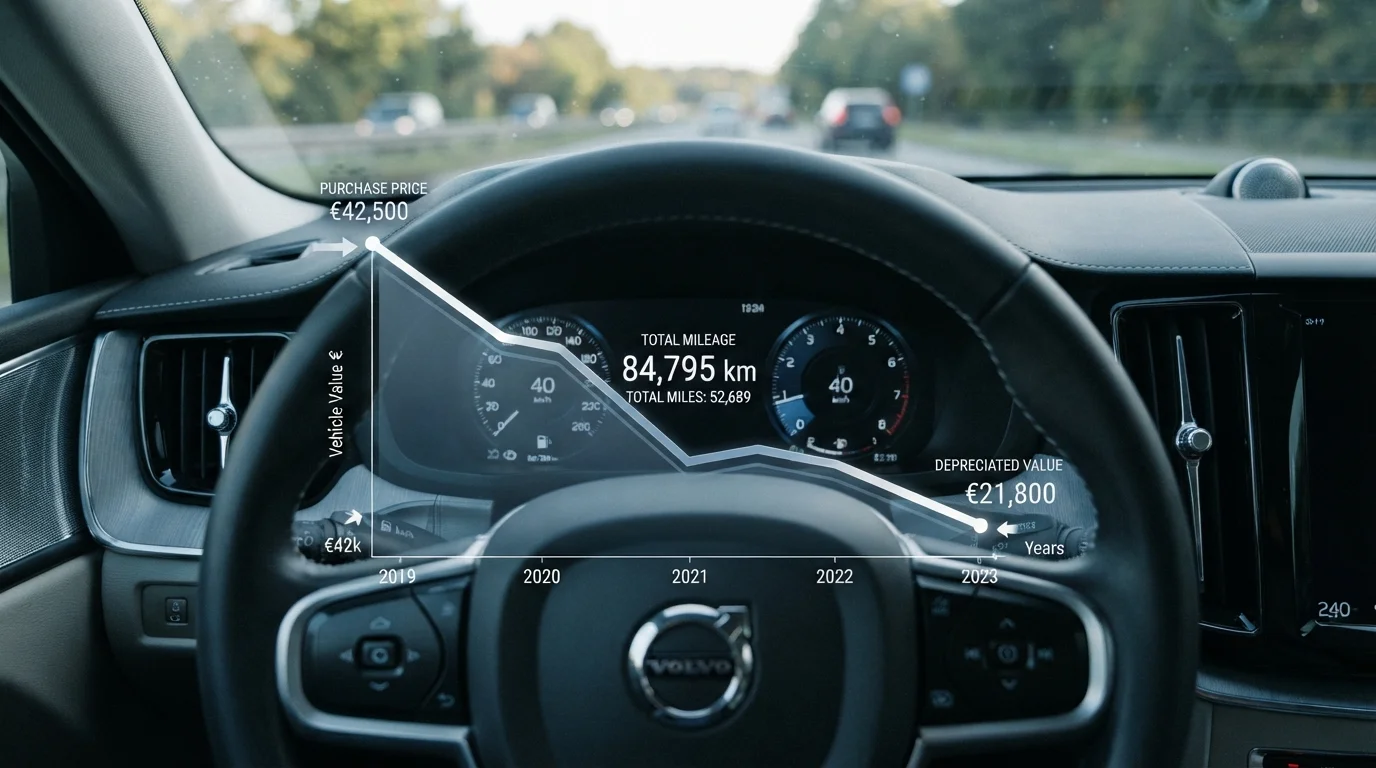
A vehicle's depreciation curve is steepest at the start. The transition from new to used happens the moment a car is driven off the lot - buyers immediately price in that the vehicle is no longer factory-new. In practical terms, a car worth $35,000 at purchase may be worth closer to $28,000 within 12 months, even with minimal mileage.
Depreciation then continues at a slower, more gradual pace through years two through five. After roughly five to seven years, the rate flattens further - the vehicle has shed most of its original value and stabilizes at a lower plateau.
“Depreciation is a real cost of vehicle ownership that many drivers overlook because it doesn't come in the form of a monthly bill. But over a five-year ownership period, it typically dwarfs what you spend on fuel or maintenance.”
— Greg Brannon, Director of Automotive Engineering, AAA
Several factors control the speed of this curve. Mileage is one of the most significant: higher annual mileage compresses resale value faster. Condition matters considerably - dings, worn interiors, and deferred maintenance all signal additional cost to a prospective buyer. Brand and model reputation for reliability directly influence resale demand. Vehicles perceived as more durable tend to hold value better. Fuel type also plays a role: shifts in fuel costs or consumer preferences can alter the resale market for specific powertrain types.
The Real-World Implications for Car Buyers
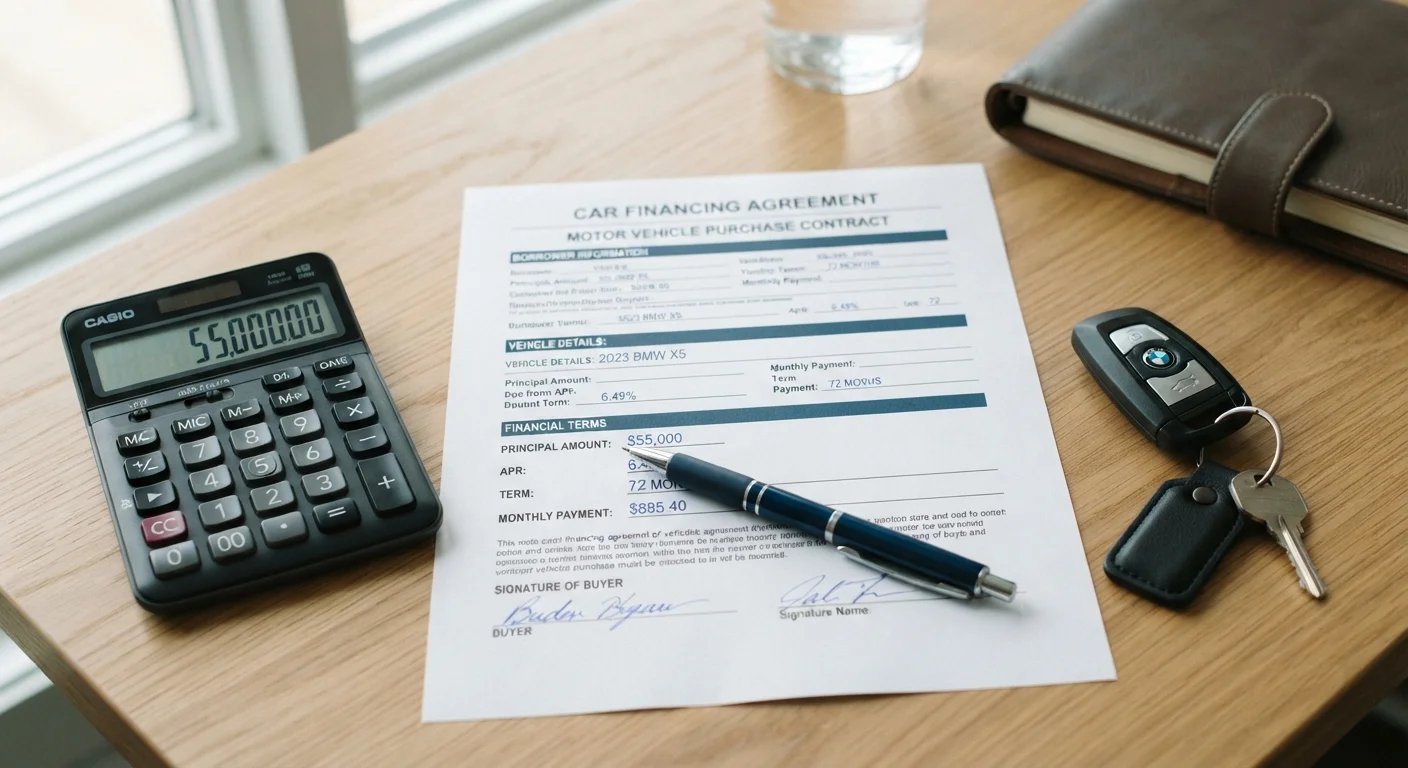
Understanding depreciation changes how you should think about a vehicle purchase. A new car financed over six years may depreciate faster than the loan balance decreases - a situation called being "underwater" or having negative equity. If that vehicle is totaled in an accident, a standard insurance payout covers market value, not the outstanding loan balance, which can leave the owner responsible for the gap.
Buying a vehicle that is two to three years old allows a buyer to benefit from the steepest portion of the depreciation curve having already occurred. Someone else absorbed the largest value drop, and the remaining useful life of the vehicle is still substantial. For a closer look at how this trade-off plays out across other ownership dimensions, see new car vs. used car trade-offs.
Consider a Shorter Loan Term
Longer loan terms reduce monthly payments but increase the risk of ending up underwater - owing more than the car is worth. Shorter terms help your loan balance decrease in line with the vehicle's market value, reducing financial exposure over the ownership period.
Depreciation also affects lease pricing: lease payments are essentially the cost of the depreciation expected during the lease term, plus financing charges. Vehicles with stronger resale retention often produce lower monthly lease payments as a result.
Practical Strategies to Limit Depreciation's Impact
Drivers can't stop depreciation, but they can manage its impact. Keeping mileage within normal ranges, maintaining a clean service record, and addressing cosmetic damage promptly all contribute to stronger resale values. Retaining maintenance receipts and manufacturer documentation gives buyers confidence and supports a higher asking price.
Choosing a vehicle with historically strong resale retention - informed by published resale value data, not brand loyalty - can meaningfully reduce the cumulative cost of ownership over a three-to-five-year holding period. Smart financial habits around vehicle ownership extend well beyond the purchase decision itself.
For a structured way to track depreciation alongside every other recurring vehicle expense, the annual car ownership cost checklist provides a useful starting framework. First-time owners who want a broader foundation can begin with a primer on total cost of ownership.
This article is for general informational purposes only and does not constitute financial or purchasing advice. Consult a qualified financial professional for guidance specific to your situation.