What Smart Security Devices Are Actually Designed to Do
The marketing language around smart home security often implies near-total protection, but the technology works within real-world limits. Understanding what each device category is built to do - and what it is not - helps you set realistic expectations and build a genuinely useful system.
Smart security products generally fall into three roles: access control (smart locks), visual monitoring (cameras and video doorbells), and environmental detection (motion, door/window, and environmental sensors). Each serves a distinct function, and their value multiplies when they operate as an integrated system rather than isolated gadgets.
It is also worth noting early that these devices protect against a specific and common threat: opportunistic crime. Research consistently suggests that most residential burglaries are not carefully planned - they target homes that appear unoccupied, easy to enter, and low-risk. Visible cameras, illuminated motion lights, and a locked smart door all raise the perceived risk for a would-be intruder. That deterrence effect is real, even if the technology cannot physically stop a determined person.
Layered Systems Outperform Single Devices
No individual product - no matter how sophisticated - provides complete protection on its own. Security professionals consistently recommend layered approaches: physical hardening of entry points, visible deterrents, detection systems, and reliable alert mechanisms working together. Smart devices fit into this framework; they do not replace it.
Smart Locks: Beyond the Key
A smart lock replaces or augments a traditional deadbolt with electronic authentication - a keypad code, a smartphone app, a fingerprint, or a key fob. The core security improvement is eliminating risks tied to physical keys: no lost keys, no copies made without your knowledge, and no locksmith required when access needs to change.
Remote access is another practical benefit. You can grant a houseguest temporary access, lock a door you left open, or confirm whether an entry point is secure - all from your phone. Some models log every entry, giving you a timestamped record of who came and went.
What smart locks do not do is harden the door itself. A lock can be bypassed by attacking the door frame, the hinges, or nearby glass. Smart locks protect the locking mechanism specifically - pairing them with solid-core doors and reinforced frames makes the overall entry point substantially more resistant.
Pair Smart Locks With Door Frame Reinforcement
The lock is only as strong as what surrounds it. Upgrading to longer hinge screws, a reinforced strike plate, and a solid-core door significantly increases resistance to forced entry - and costs far less than most smart lock installations. Address the physical barrier before focusing on the electronic mechanism.
Cameras and Video Doorbells: Documentation and Deterrence
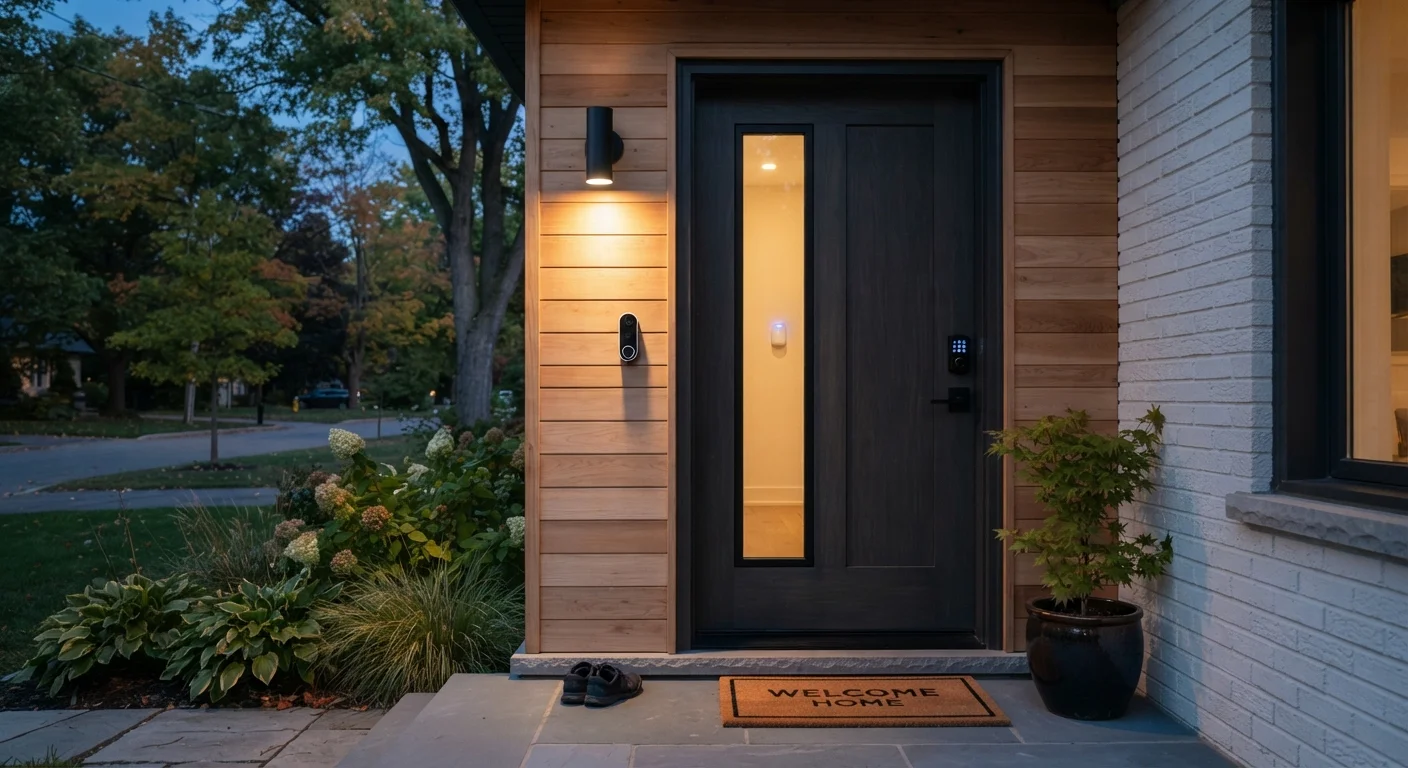
Outdoor cameras and video doorbells are arguably the most visible component of a smart security setup. Their value operates on two levels: deterrence (a camera a potential intruder can see may cause them to move on) and documentation (recorded footage serves as evidence and supports insurance claims).
Modern cameras offer features like motion-triggered recording, night vision, cloud or local storage, and two-way audio. Some include built-in sirens or can trigger external alarms. These features expand what a camera can do in the moment - but it is important to understand that footage alone does not prevent an event from unfolding. It records what happened.
Camera placement matters enormously. Covering primary entry points - front door, back door, garage - provides the most meaningful coverage. Poorly aimed cameras, obscured lenses, or inadequate lighting at night significantly reduce usefulness. Auditing your setup periodically ensures cameras remain effective as conditions around your home change.
~60%
Burglaries involving forced entry
FBI Uniform Crime Reports indicate roughly 60% of residential burglaries involve some form of forcible entry, underscoring the value of hardened physical barriers alongside camera systems.
3x
Deterrence effect of visible cameras
Studies cited by the Urban Institute suggest visible security measures, including cameras, can meaningfully reduce burglary risk in residential areas by raising perceived detection risk.
Motion Sensors and Environmental Detectors: The Invisible Layer
Motion sensors detect movement within a defined range and trigger a response - a light turning on, a camera starting to record, or an alert sent to your phone. Most consumer-grade sensors use passive infrared (PIR) technology, sensing the heat emitted by a moving body. They are effective when correctly placed and calibrated, and they form an important interior detection layer if an intruder makes it past exterior barriers.
Door and window contact sensors are simpler but valuable: they alert you the moment an entry point opens unexpectedly. Combined with motion sensors, they create overlapping detection coverage. Environmental sensors expand beyond intrusion - smoke, carbon monoxide, water leak, and temperature sensors address safety threats that have nothing to do with crime.
One honest limitation: false alerts are common if sensors are poorly configured. Pet-immune settings, adjustable sensitivity, and thoughtful placement (away from vents, direct sunlight, and high-traffic areas) reduce the fatigue that comes from too many unnecessary notifications. First-time smart home owners often underestimate how much sensor tuning affects day-to-day usability.
The Security of the System Itself
Ironically, connected security devices introduce a category of risk that traditional hardware does not carry: digital vulnerability. A camera with a weak password, a lock connected to an unsecured network, or devices running outdated firmware can be exploited remotely - a very different threat than physical break-in.
This does not mean smart security is inherently risky, but it does mean the devices themselves require the same security hygiene as any other connected technology. Strong, unique passwords for every device and its associated account, two-factor authentication where available, and regular firmware updates address the most common attack vectors. Understanding what data your devices collect and transmit is an important part of knowing what you are agreeing to when you connect them to your network.
The broader smart home setup also matters. A reliable, well-planned smart home that treats network security as a foundation - not an afterthought - significantly reduces exposure across all connected devices, not just security hardware.
“The goal of home security isn't to make entry impossible - it's to make your home a less attractive target than the next one. Visible, layered deterrents do exactly that.”
— A residential security consultant, Physical security practitioner with expertise in residential risk assessment
This article is for general informational purposes only. Smart home security devices are one element of home safety; consult a licensed security professional for a comprehensive assessment of your specific situation.