City Character: Scale vs. Soul
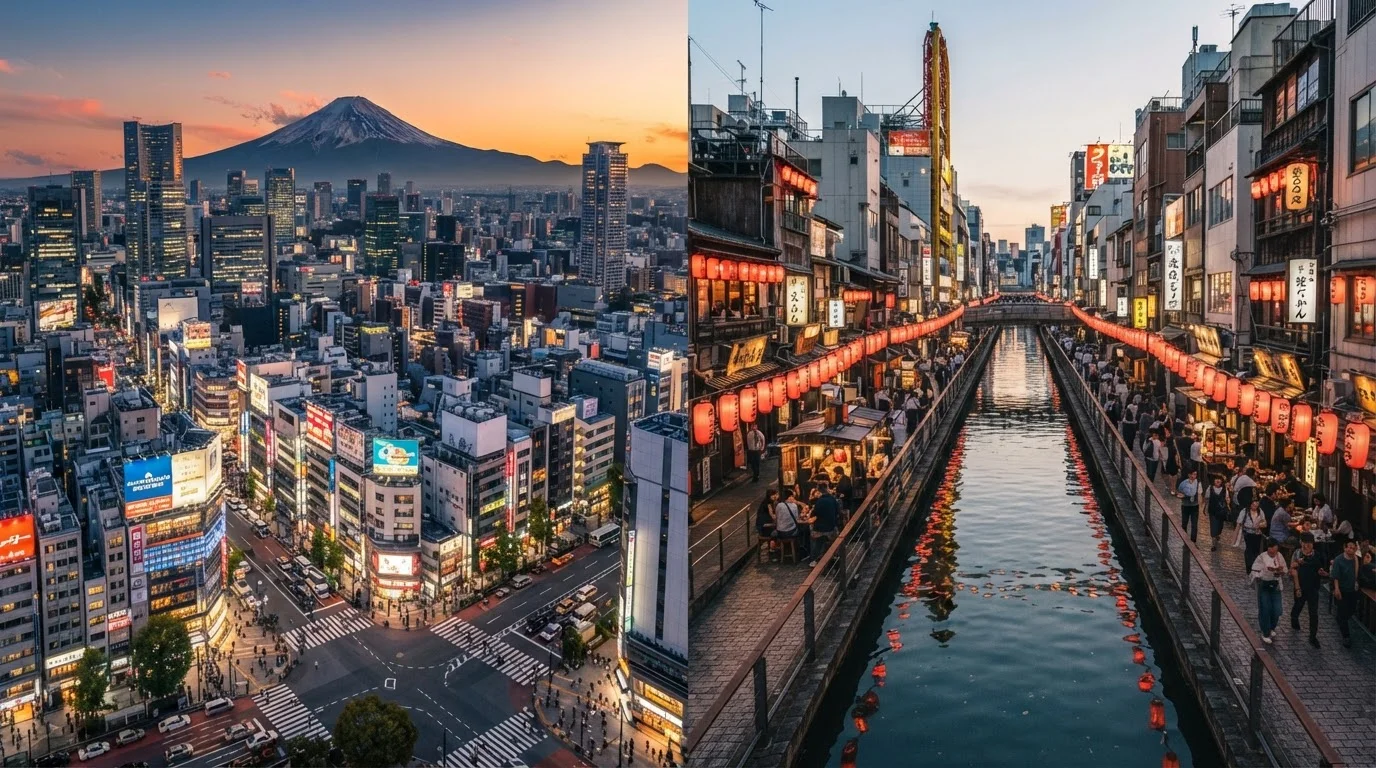
Tokyo is one of the world's most populated metropolitan areas - a layered, sprawling city where each neighborhood feels like its own universe. Shibuya pulses with youth energy; Yanaka preserves Edo-era streetscapes; Akihabara glows with electronics and anime culture. Navigating it all is part of the adventure, though it can also feel overwhelming. As the pace of your itinerary shapes your experience enormously, first-timers especially should plan Tokyo time carefully.
Osaka, by contrast, has a reputation for being warmer and more straightforward. Locals here take pride in a cultural concept called kuidaore - roughly translated as "eat until you drop" - and that spirit permeates the city. Streets in Namba and Shinsekai feel genuinely lived-in rather than curated for tourism. If cultural immersion over sightseeing is your goal, Osaka often delivers it more naturally.
Food, Cost, and Everyday Life
Food is where Osaka truly distinguishes itself. The city's street food scene - centered on Dotonbori canal and the surrounding lanes - is legendary among travelers and food writers alike. Takoyaki (octopus balls), okonomiyaki (savory pancakes), and fresh sashimi are affordable, abundant, and exceptional. Dining out in Osaka frequently costs less per meal than comparable experiences in Tokyo, particularly when eating like a local rather than at hotel restaurants.
Tokyo's food scene is world-class too - the city has more Michelin-starred restaurants than any other city globally, as of recent Michelin Guide tallies - but everyday costs skew higher. Accommodation, transit within the city, and convenience spending all add up faster. That said, Tokyo's sheer density of options means every budget level is served.
200+
Michelin-starred restaurants in Tokyo
Tokyo has consistently ranked among the cities with the highest concentration of Michelin-starred restaurants globally, according to annual Michelin Guide publications.
~2.5 hrs
Shinkansen travel time between cities
The Tokaido Shinkansen connects Tokyo and Osaka (Shin-Osaka station), making a dual-city itinerary practical for most trip lengths.
13M+
Tokyo city proper population
Tokyo's city proper population makes it one of the most densely populated urban centers in the world, contributing to its scale and complexity as a travel destination.
Both cities are served by Japan's famous IC card transit system (Suica or ICOCA), making getting around straightforward. Tokyo's subway network is vastly more extensive, which is both a strength and a complexity. Osaka's system is more compact and arguably easier to learn quickly.
Culture, Attractions, and Travel Style
Tokyo's cultural institutions are staggering in breadth - from the Tokyo National Museum in Ueno to the teamLab digital art spaces, sumo tournaments in Ryogoku, and traditional tea ceremony experiences in quieter districts. It rewards travelers who enjoy diving deep into specific interests. Thinking about whether to live local or do the tourist circuit matters enormously here: Tokyo can support either approach across weeks.
Osaka has its own landmark attractions - Osaka Castle, Universal Studios Japan, and the Shinsekai retro district - but the city's real draw is its street-level energy. It's a place where conversation with a vendor at a standing ramen bar or wandering through Kuromon Ichiba market often becomes the highlight of the day. For travelers who've compared city contrasts before - much like the distinct personalities covered in articles about two iconic cities with very different rhythms - Osaka-versus-Tokyo operates on a similar principle: same country, genuinely different soul.
| Criterion | Tokyo | Osaka |
|---|---|---|
| City Scale | Massive - 13+ million in city proper | Large - approx. 2.7 million city proper |
| General Pace | Fast, intense, highly efficient | Relaxed, sociable, lively |
| Food Culture | World-class, diverse, broad price range | Street food-focused, affordable, bold flavors |
| Typical Daily Cost | Higher on average | Slightly lower overall |
| Transit Complexity | Extensive but intricate | Simpler, more compact |
| Neighborhood Variety | Exceptional - dozens of distinct areas | Good - several distinct districts |
| Local Character | Reserved, polished, precise | Outgoing, warm, humorous |
Practically speaking, many travelers visit both cities on a single Japan trip. The shinkansen connects them in roughly 2.5 hours, making a split itinerary very feasible.