The Chemistry Behind the Cleanse
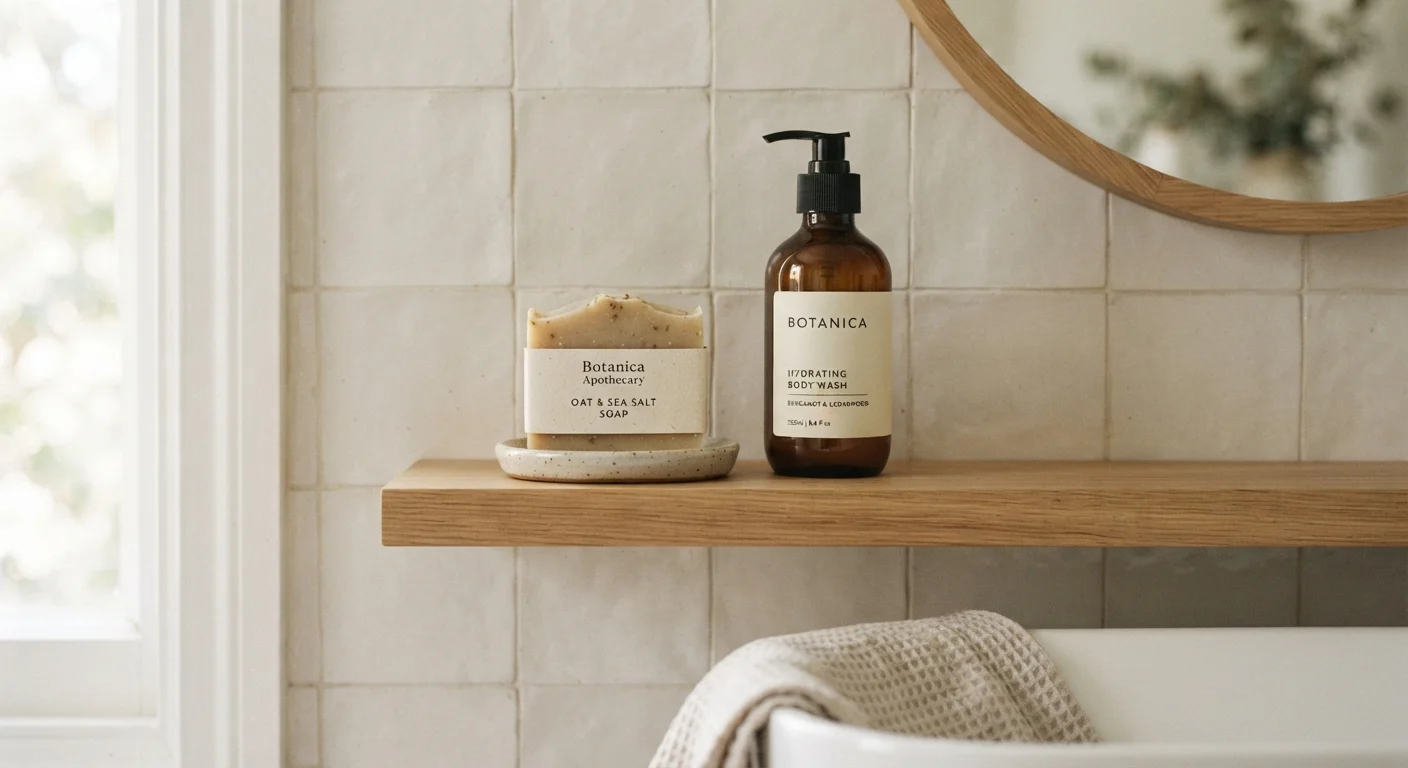
At its core, both formats do the same thing: they use surfactants - compounds that attract both water and oil - to lift dirt and sebum off the skin so water can rinse them away. The meaningful differences show up in formulation, not function.
Bar soap is traditionally made through saponification, a process that combines fats or oils with a strong alkali (usually sodium hydroxide). This process naturally produces a product with a pH typically ranging from 9 to 10. Human skin, by contrast, has a naturally acidic surface pH of around 4.5 to 5.5 - a range that supports the skin's protective barrier and its microbiome. Repeated exposure to a high-pH cleanser can temporarily shift skin's surface pH, which may weaken barrier function over time, particularly for those with sensitive or dry skin.
Body wash formulas are built differently. Synthetic detergents (sometimes called syndets) allow manufacturers to control pH precisely, and most liquid body washes are formulated closer to skin's natural range. They also have more room for add-ins: glycerin, ceramides, hyaluronic acid, and botanical extracts can all be suspended in a liquid base in ways a solid bar makes difficult.
| Criterion | Bar Soap | Body Wash |
|---|---|---|
| Typical pH range | 9-10 (traditional); lower for syndet bars | 5-7 (often pH-balanced) |
| Moisturizing add-ins | Limited by solid format | Easily incorporated (glycerin, ceramides) |
| Fragrance risk | Present in many formulas | Present in many formulas |
| Packaging waste | Minimal - often paper or none | Plastic bottle; some refill options available |
| Shared-use hygiene | Surface contact between users | Pump/squeeze dispenser reduces contact |
| Formulation control | Limited by saponification chemistry | Broad flexibility for targeted ingredients |
| Cost per use | Generally lower | Variable; mid-to-high range common |
That said, not all bar soaps are created equally. Syndet bars - solid cleansers made with synthetic surfactants rather than traditional saponification - can be just as pH-balanced as a liquid wash. If you prefer bar format but want a gentler option, checking whether a bar is syndet-based is worth the effort. Our guide on reading a skincare ingredient label can help you decode what you're actually buying.
What This Means for Different Skin Types
Understanding formulation helps, but the practical question is how each format performs on your skin.
pH Disruption Is Usually Temporary
Research suggests that healthy skin can restore its surface pH within a few hours of cleansing. However, for skin that is already compromised - due to eczema, rosacea, or chronic dryness - repeated high-pH exposure may slow that recovery. This is why cleanser choice tends to matter more for reactive skin types than for resilient ones. If your skin feels balanced after showering, your current cleanser is likely not causing significant disruption.
Dry skin: High-pH cleansers can increase transepidermal water loss - the passive evaporation of moisture through the skin's surface. If your skin feels tight or itchy after showering, your cleanser's pH may be contributing. A liquid body wash with humectants is often a gentler starting point. Pairing either format with prompt moisturizing after the shower also makes a significant difference - see our piece on moisturizing after the shower for the reasoning behind timing.
Oily or normal skin: Skin that tolerates a wider pH range without reacting may do perfectly well with a traditional bar soap, especially one made with conditioning oils like shea or coconut. The higher pH is less likely to trigger visible irritation when the barrier is robust.
Sensitive or eczema-prone skin: Fragrance - whether synthetic or natural - is among the most common contact allergens in rinse-off products. Both bar soaps and body washes can contain fragrance, so fragrance-free labeling matters more than the format itself. A syndet bar or a fragrance-free liquid wash are both reasonable options; what to avoid is any cleanser that leaves skin feeling stripped or reactive after rinsing.
If you also exfoliate the body, it's worth knowing how cleansing pH interacts with acid-based exfoliants. Our overview of chemical exfoliation vs. physical scrubs on the body covers the trade-offs in that adjacent decision.
4.5-5.5
Healthy skin surface pH range
Dermatological literature consistently cites this as the typical acidic pH of healthy human skin, supporting barrier function and microbiome balance.
9-10
Typical traditional bar soap pH
The saponification process used in conventional bar soap production naturally yields an alkaline product, which sits well above skin's own pH range.
This article is for general informational and educational purposes only. It is not a substitute for professional dermatological or medical advice. If you have a skin condition or persistent concerns, consult a qualified healthcare provider.