Why the Ingredient List Is the Most Honest Part of the Label
Front-of-pack claims - words like hydrating, brightening, or clinically tested - are marketing language. The ingredient list, by contrast, is a regulated disclosure. In the United States, the FDA requires cosmetic products to declare every ingredient using standardized INCI names, giving consumers a direct window into what is actually in the formula.
Learning to read this list is one of the most practical skills a skincare consumer can develop. It lets you compare products meaningfully, identify ingredients your skin responds well or poorly to, and cut through packaging claims that may not reflect the formula's actual composition. If you're building a routine from scratch, pairing this skill with a solid foundation is a smart starting point - see our guide on your first skincare routine for the essentials.
This Is Education, Not Medical Advice
The information in this article is general consumer education about reading product labels. It is not a substitute for advice from a dermatologist or licensed skincare professional. If you have a skin condition, persistent irritation, or allergic reactions, consult a qualified healthcare provider before changing your routine.
The same label-reading logic applies beyond skincare - if you're curious how these principles translate to hair care, our article on reading a shampoo label walks through the same concepts for hair products.
What You Need Before You Start
What you will need
Product packaging or insert
The primary source of the ingredient list you will be reading.
Cosmetic ingredient database (e.g., a public INCI reference)
Helps you look up unfamiliar ingredient names and their general functions.
Magnifying glass or phone camera zoom
Makes small-print ingredient lists easier to read accurately.
How to Read a Skincare Ingredient List
Locate the full ingredient list on the packaging
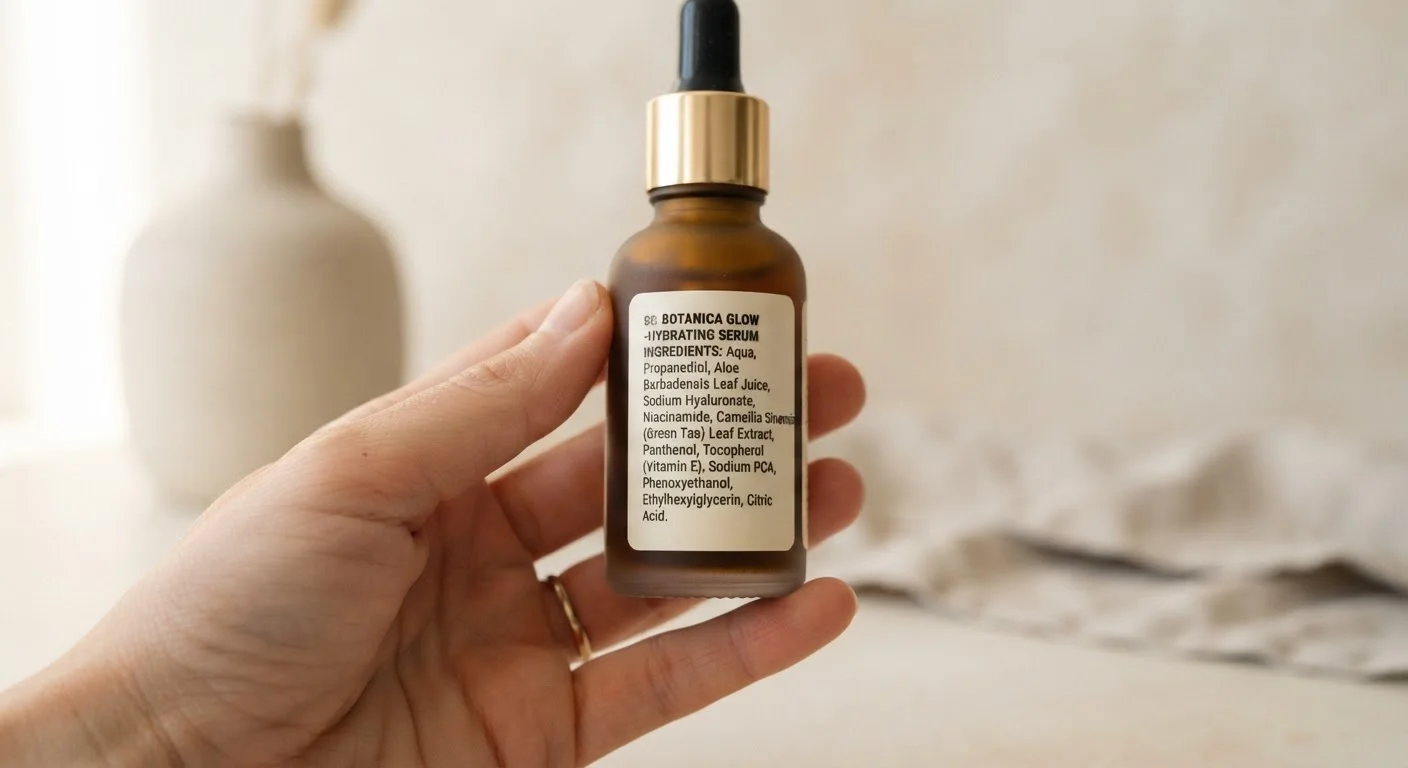
In the US, the FDA requires that cosmetic products display a complete list of ingredients, usually on the back or bottom of the container. It may be labeled Ingredients or Ingr. The list uses standardized INCI (International Nomenclature of Cosmetic Ingredients) names - formal chemical names that may look unfamiliar even for simple substances. For example, water appears as Aqua or Water (Aqua).
Understand that order equals concentration
Ingredients are listed in descending order by weight or concentration. The first ingredient is present in the greatest amount; the last is present in the smallest amount. This single rule is the most important concept on the label. A moisturizer that lists water first and shea butter tenth contains far more water than shea butter - which is completely normal for a lightweight lotion.
Identify the likely function of ingredients by their position
Ingredient position gives you clues about a product's purpose and texture:
- Top of the list (positions 1-5): Usually the base - water, oils, waxes, or humectants like glycerin. These determine texture and skin feel.
- Middle of the list: Emulsifiers, thickeners, and some functional actives.
- Lower third of the list: Preservatives, fragrance, colorants, and low-concentration actives.
Note that some actives - like retinol or certain peptides - are effective at very low concentrations, so a low list position does not necessarily mean an ingredient is ineffective.
Recognize the 1% threshold rule
There is an important exception to strict descending order: once concentrations fall below 1%, manufacturers may list those ingredients in any order they choose. This is why you'll sometimes see high-profile actives like niacinamide or vitamin C grouped with preservatives near the end - it doesn't mean they're absent, just present at 1% or less. Brands are not required to disclose exact percentages, so you can rarely know the precise amount of any individual ingredient.
Spot preservatives, fragrance, and potential irritants
Toward the end of most lists you'll find preservatives - ingredients that prevent microbial growth and keep the product safe to use. Common examples include phenoxyethanol, sodium benzoate, and potassium sorbate. These are generally considered safe at the concentrations used in cosmetics, but individuals with sensitivities may react to specific ones. Fragrance (listed as Fragrance, Parfum, or individual aroma chemicals) also typically appears near the bottom.
Cross-reference unfamiliar names using a reliable resource
Don't let an intimidating chemical name alarm you - many benign, naturally derived ingredients have long INCI names. For example, tocopherol is simply vitamin E. If an ingredient looks unfamiliar, look it up in a public cosmetic ingredient database or a trusted glossary before drawing conclusions. Our skincare ingredients glossary explains common actives, humectants, and emollients in plain language.
Use INCI Names as Your Reference Point
Ingredients on US skincare labels must use their INCI (International Nomenclature of Cosmetic Ingredients) names - the standardized international chemical names. These names are consistent across brands, so once you learn that "sodium hyaluronate" is the salt form of hyaluronic acid, you'll recognize it on any label. Our skincare ingredients glossary is a useful companion for decoding common INCI names.
Putting It Into Practice
Once you understand the ordering rules and the 1% threshold, reading labels becomes much faster. A practical habit is to scan the first five ingredients of any new product before buying - they tell you whether the formula is water-based or oil-based, and whether key functional ingredients like glycerin or a plant oil are genuinely present in meaningful amounts.
"Fragrance" Can Mean Many Things
In the US, manufacturers are not required to disclose the individual components that make up a fragrance blend - it is considered a trade secret. If you have sensitive skin or known fragrance sensitivities, look for products labeled "fragrance-free" rather than "unscented," since unscented products may still contain masking fragrances.
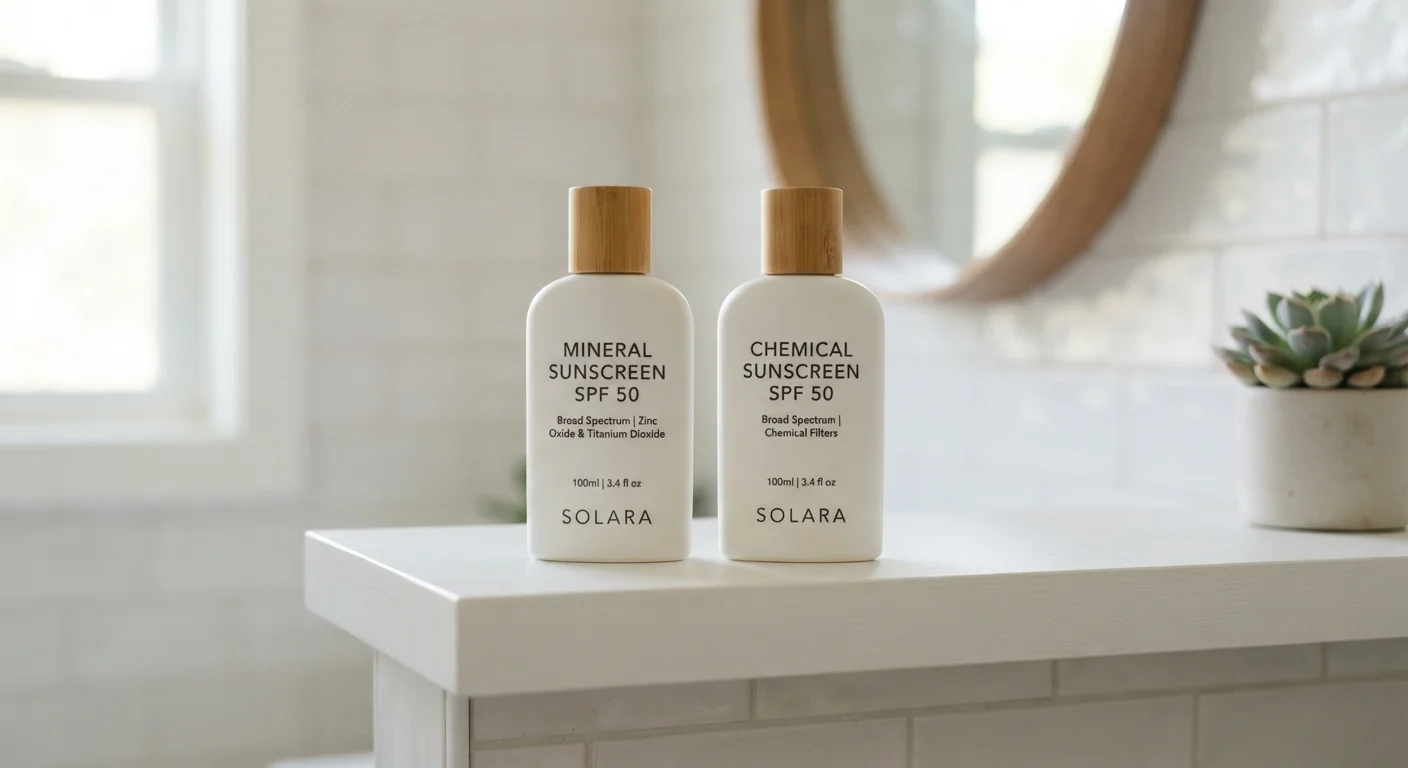
For sunscreen products, the label rules differ slightly: active sunscreen ingredients (like zinc oxide or avobenzone) are classified as drug actives in the US and must be listed separately under an "Active Ingredients" heading before the general ingredient list. Our explainer on SPF numbers and ratings covers what those sunscreen labels are actually measuring.
Understanding ingredient order also makes you a more informed product stacker. When you know what's in each product - and at roughly what level - you can layer them more deliberately. For more on that, see our guide on why product application order matters.
This article provides general consumer education about cosmetic product labeling and is not medical or dermatological advice. If you experience persistent skin irritation, allergic reactions, or have a diagnosed skin condition, please consult a qualified healthcare professional.