Where Skincare and Self-Care Actually Meet
The phrase "self-care" gets used so broadly that it can feel meaningless - a marketing shorthand for bath bombs and face masks. But the underlying concept has genuine grounding in behavioral health: self-care refers to deliberate actions taken to maintain or improve one's physical, mental, or emotional well-being. By that definition, a skincare routine can qualify - but only when it's practiced with some degree of intention.
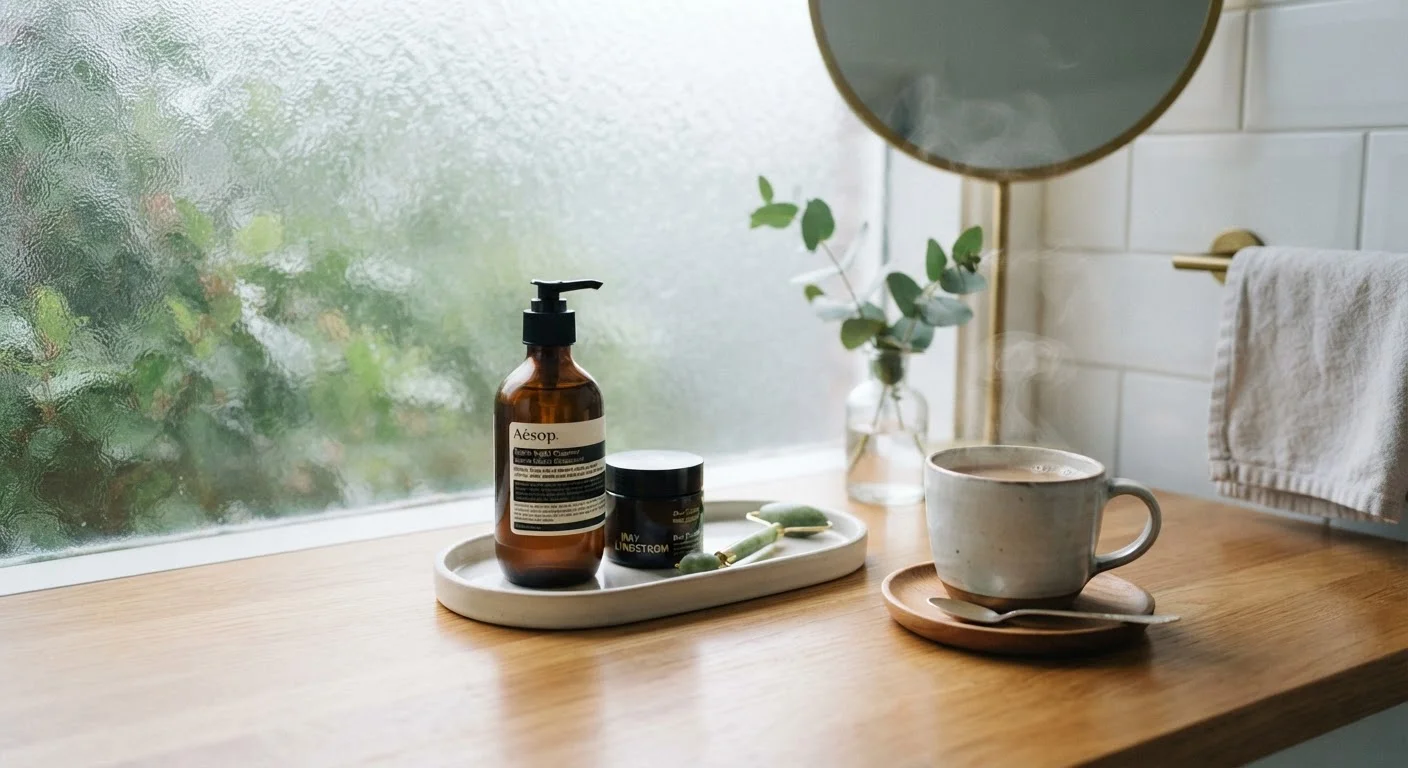
The distinction matters. Going through the motions of washing your face while mentally drafting tomorrow's to-do list is not the same as using those two minutes as a deliberate pause. The ritual quality - the repetition, the sensory experience, the small act of attending to yourself - is what gives skincare its potential psychological dimension.
For a deeper look at the mindfulness side of this, see our article on turning daily grooming into a mental reset.
Self-Care Is Not a Clinical Intervention
A skincare routine can be a meaningful wellness habit, but it is not a substitute for mental health treatment. If stress, anxiety, or low mood are significantly affecting your daily life, please reach out to a qualified mental health professional. Self-care practices work best as complements to - not replacements for - appropriate care.
The Stress-Skin Connection Is Biological
One reason the skincare-as-self-care framing holds up is that stress and skin health are genuinely linked - not just conceptually, but physiologically. When the body experiences stress, it releases cortisol, a hormone that increases oil production, disrupts the skin's protective barrier, and can exacerbate inflammatory skin conditions including acne, rosacea, and eczema.
This means that practices which reduce chronic stress - whether that's a morning routine, a breathing exercise, or adequate sleep - can have downstream effects on skin. The relationship isn't one-directional. Feeling better about how your skin looks and feels can also reduce stress, creating a feedback loop between emotional state and skin condition.
Understanding your skin barrier is part of this picture - protecting it through consistent care is both a dermatological and a wellness practice.
~40%
Adults reporting skin flares linked to stress
Research in dermatology and psychodermatology consistently documents a significant proportion of patients noting stress as a trigger for skin condition worsening, though exact figures vary by study and condition.
2-3 min
Minimum meaningful routine duration
Behavioral wellness research suggests even brief, consistent rituals can have a measurable effect on mood and perceived control when practiced with intention - quantity of time matters less than regularity.
Ritual, Repetition, and Why They Work
Health psychology research suggests that predictable daily routines reduce decision fatigue and provide a sense of structure and control - both of which support emotional regulation. A skincare routine, practiced consistently, functions as a behavioral anchor: a reliable signal to your nervous system that this time is yours.
This doesn't require an elaborate multi-step regimen. In fact, overcomplicating your routine can undermine the calming effect by introducing decision-making pressure and skin irritation. The goal is a simple sequence you can perform without stress.
If you're just getting started, our guide on what you actually need for a first skincare routine keeps things grounded in essentials. And for those who find evening routines particularly restorative, nighttime skincare works differently - it's worth understanding why.
Start With Two Minutes, Not Twenty
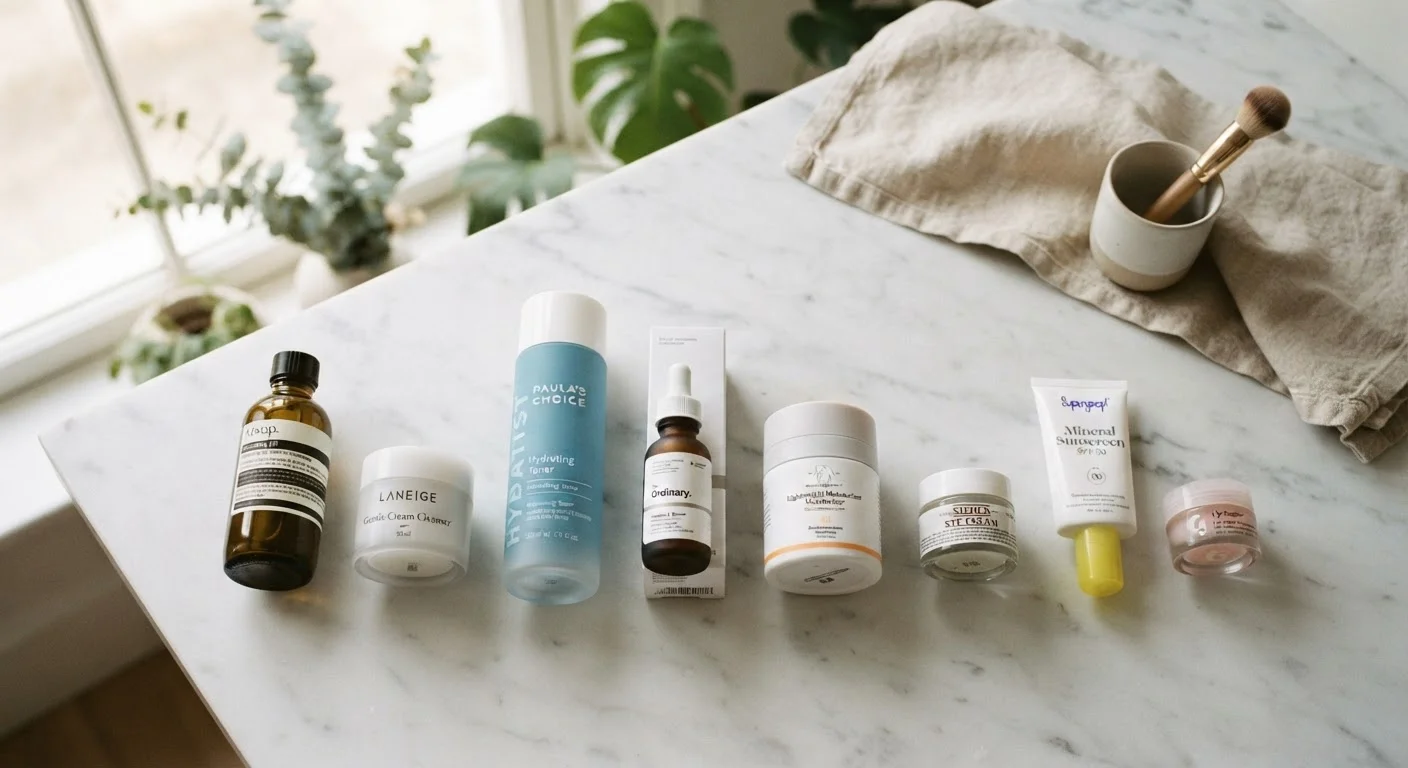
If the goal is to build a sustainable self-care habit, start with the smallest version of a routine you'll actually do every day. A cleanser and moisturizer, applied mindfully, beats an elaborate ten-step process you abandon after two weeks. Consistency is the mechanism - everything else is secondary.
What Counts - and What Doesn't
Not every skincare habit qualifies as meaningful self-care, and it's worth being honest about that. Purchasing products compulsively, following trends out of anxiety about your appearance, or feeling guilty when you skip a step are signs that a routine has moved away from self-care and toward something more pressured.
Genuine self-care in a skincare context looks like: setting aside consistent time, being present during the routine, choosing products that work for your actual skin rather than aspirational ideals, and letting go of perfectionism when life gets in the way. For a structured way to assess whether your habits are actually serving you, a weekly self-care audit can help surface what's working and what isn't.
The evidence suggests that consistency and intention - not complexity or cost - are what create the overlap between skin health and psychological well-being. That's a low barrier, and it's genuinely accessible to most people.
This article is for informational purposes only and does not constitute medical or mental health advice. Consult a qualified healthcare professional for personal health concerns.