Why Open Shelving Has Stayed in the Conversation
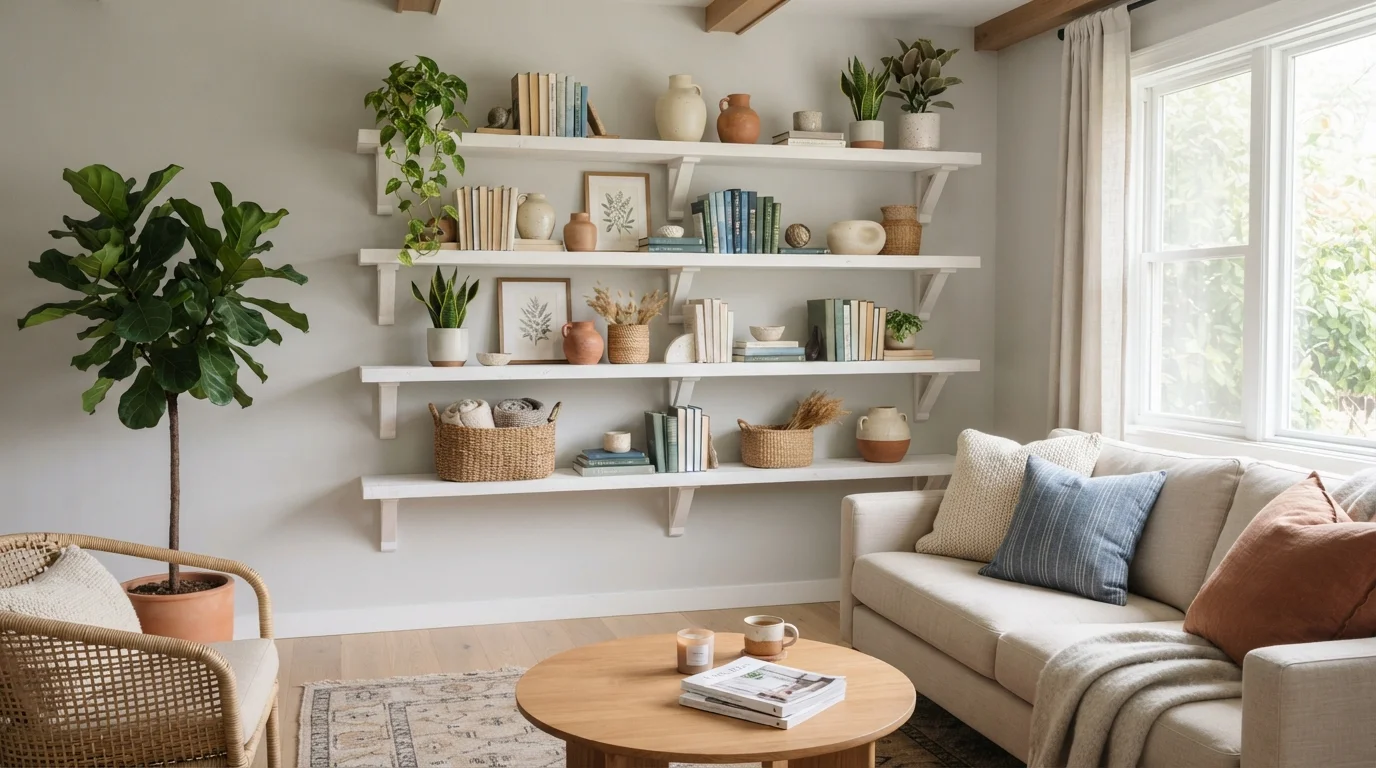
Open shelving isn't a new idea - it has cycled through interior design for decades - but its current popularity owes a lot to the rise of social media-driven home aesthetics. The look is undeniably appealing: floating wooden planks, a row of matched ceramics, a few trailing plants. It feels lived-in without looking cluttered, personal without being chaotic.
What those images rarely show is the behind-the-scenes effort, the dust that settles between styled objects, or the structural planning required to hang shelves safely. Before committing to open shelving in your living space, it's worth understanding both what it genuinely offers and what it genuinely demands.
If you're weighing open shelves against closed cabinetry in a kitchen setting specifically, the open shelving vs. upper cabinets comparison explores that specific trade-off in more detail.
The Real Advantages of Open Shelving
Open shelves offer genuine design and functional benefits that explain their enduring appeal.
Creates a sense of visual openness and airiness
Without cabinet doors closing off wall space, open shelves allow the eye to move freely across a room, which can make spaces feel larger and less enclosed.
Puts personality and décor on display
Books, ceramics, plants, and meaningful objects become part of the room's design rather than being hidden away - adding warmth and individuality that closed storage can't provide.
Everything in view means easier access
Items you use regularly are immediately visible and reachable, removing the need to open and search through cabinet doors or drawers.
Generally lower cost than built-in cabinetry
A set of floating shelves typically costs significantly less to purchase and install than equivalent closed cabinetry, making them accessible at a range of budgets.
Flexibility to restyle or reconfigure over time
Unlike fixed cabinetry, open shelves are relatively easy to swap out, add to, or rearrange as your taste or storage needs evolve.
One underappreciated advantage is how open shelving can help smaller rooms feel less boxed-in. Closed cabinetry adds visual mass to a wall; open shelves let the eye travel through the space. For compact rooms, this matters. Our guide to small-space decorating strategies covers several related approaches that work alongside open shelving.
The Honest Disadvantages
The trade-offs of open shelving are real, and underestimating them is one of the most common reasons homeowners end up regretting the choice.
Dust accumulates constantly and visibly
Every surface and displayed object is exposed to airborne dust, requiring more frequent cleaning than closed storage. In high-traffic or cooking-adjacent spaces, this becomes especially noticeable.
Demands consistent tidiness to look intentional
Open shelves that aren't curated can look cluttered quickly. The aspirational look requires ongoing effort - things set down casually or stored haphazardly are always visible.
Items are exposed to light, moisture, and grease
In kitchens or sunny rooms, prolonged exposure can fade materials, warp books, or leave a film on objects - especially near cooking surfaces.
Installation requires careful structural planning
Shelves must be securely anchored to studs or with correctly rated hardware. Improper installation can lead to shelves pulling away from walls, especially under load.
May complicate renting or resale situations
Lease agreements may restrict wall alterations, and not every future buyer or renter will share your preference for open storage over traditional cabinetry.
A Note on Structural Safety
Open shelves that hold books, ceramics, or other heavy items must be anchored correctly to avoid wall damage or, in serious cases, injury. Always check whether your wall is drywall, plaster, or masonry before choosing hardware, and confirm stud locations with a stud finder. For heavier loads - especially on older or plaster walls - consider consulting a professional installer. This is especially relevant if your home has older construction; the article on load-bearing wall misconceptions offers helpful context on understanding your wall types.
If you already enjoy curating a gallery wall, you likely have the styling sensibility and patience that open shelving rewards. If gallery walls have always felt like too much work to maintain, that's useful information about how open shelves might feel over time.
Installation: What to Know Before You Drill
Open shelving is only as good as its installation. A shelf that can't safely support books, ceramics, or other weighty objects is a hazard, not a feature. The key considerations are wall type, stud placement, and hardware weight ratings.
Drywall alone cannot support heavy loads - shelves must be anchored into wall studs or use appropriately rated anchors for the specific load. Floating shelves, which conceal their brackets entirely, require particularly precise installation. If you're uncertain about your wall's structure or whether your planned location intersects with wiring or plumbing, consulting a handyman or contractor before drilling is a sound precaution.
Renters face an additional layer of complexity: most leases restrict the size and number of wall holes permitted. Check your lease before committing to any shelf installation, and factor in the cost and effort of patching walls when you move out.
68%
Homeowners who cite storage as a top renovation priority
According to the National Association of Realtors' periodic Profile of Home Staging reports, storage solutions consistently rank among the most valued home improvements.
1-2 hrs
Estimated weekly styling and dusting time for open shelves
Interior designers and home organizers commonly estimate that a full wall of open shelving requires roughly one to two hours of maintenance per week to remain presentable.
For anyone exploring broader home improvement projects alongside a shelving refresh, the Home Improvement Tips hub covers a wide range of practical upgrade guidance.
Making the Decision That's Right for Your Home
Open shelving suits some households and frustrates others - the difference usually comes down to lifestyle fit rather than budget or taste. Ask yourself a few honest questions before committing: How often do you dust and tidy? Do you already own items you'd enjoy displaying, or would you need to buy them? Is your living space prone to cooking grease, pet hair, or high foot traffic that increases dust?
If your answers suggest that visible storage will become a source of stress rather than satisfaction, there are plenty of ways to add personality and openness to a room without open shelves - color, lighting, and furniture arrangement among them. The decorating strategies for smaller spaces article explores several of these alternatives.
If open shelving does feel like the right fit, start small - one shelf run rather than a full wall - so you can live with the maintenance reality before scaling up.