How Each Storage Style Actually Works
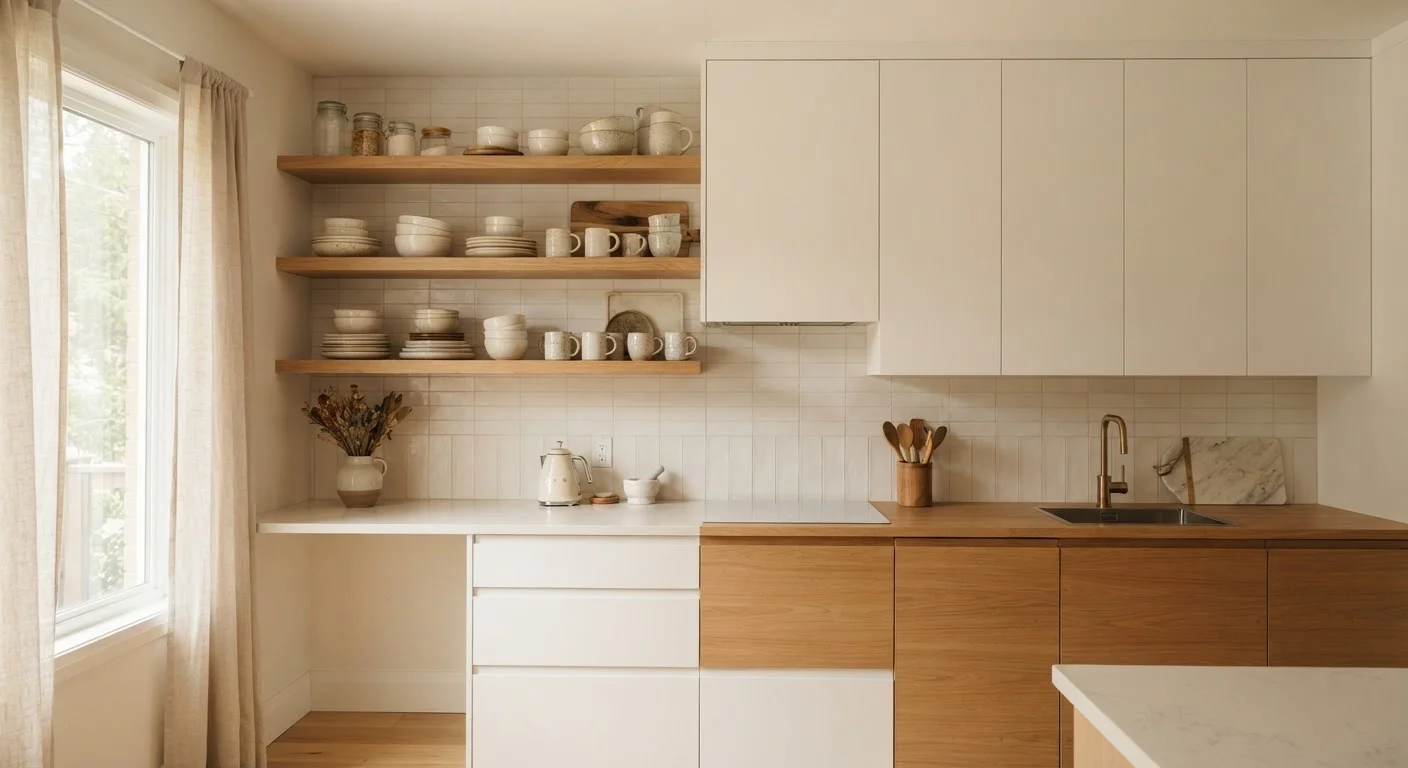
Open shelving replaces enclosed cabinetry with exposed brackets and boards - everything you store is visible at all times. Upper cabinets, by contrast, use doors (typically hinged or sliding) to conceal contents behind a uniform facade. Both sit at roughly the same wall height above countertops, but they deliver a very different experience in daily kitchen life.
Open shelves encourage deliberate curation. Because everything is on display, the items you store become part of your kitchen's visual identity. Upper cabinets ask nothing of you aesthetically - close the door and the contents disappear. For many households, that low-maintenance concealment is worth more than any design benefit.
For a broader look at how storage decisions affect the way a kitchen feels day to day, see why kitchens feel cluttered even after decorating.
| Criterion | Open Shelving | Upper Cabinets |
|---|---|---|
| Visual impact | Airy, open, design-forward | Uniform, contained, traditional |
| Dust and grease exposure | High - items exposed constantly | Low - doors protect contents |
| Storage capacity | Limited by display constraints | Higher with interior organizers |
| Maintenance frequency | Regular wiping required | Occasional exterior cleaning |
| Perceived room size | Makes space feel larger | Can feel heavier in small kitchens |
| Clutter visibility | Everything on display | Contents fully concealed |
| Installation complexity | Typically simpler and lower cost | More involved; requires precise fitting |
Aesthetics, Light, and Perceived Space
One of the most cited reasons homeowners choose open shelving is its effect on visual space. Removing bulky upper cabinet boxes from the wall allows the eye to travel freely and lets natural or artificial light move across the room unobstructed. In kitchens with limited square footage, this can meaningfully reduce a cramped feeling without any structural changes.
That said, open shelving requires what designers sometimes call a "curated restraint" - the discipline to store only what looks intentional. A shelf crowded with mismatched items, expired pantry boxes, or seldom-used appliances quickly undermines the aesthetic you were after. Spatial strategies for small kitchens explores additional ways to open up a tight layout without relying solely on shelving choices.
Upper cabinets present a cleaner, more uniform wall surface when closed. Cabinet fronts can be painted, stained, or fitted with decorative hardware to contribute to the kitchen's design - without the ongoing pressure to keep the interior photogenic.
~30%
Homeowners who removed upper cabinets during remodels
Design surveys have consistently shown a growing share of kitchen renovations incorporate open shelving in place of some or all upper cabinetry, reflecting the trend's sustained popularity.
2-3×
More frequent dusting needed for open shelves vs. cabinets
Interior designers and cleaning professionals generally advise that open kitchen shelves near cooking areas need wiping down two to three times more often than enclosed cabinet exteriors.
Maintenance, Dust, and Kitchen Realities
Open shelves accumulate dust and grease film at a much faster rate than enclosed cabinets. Items stored near a range or oven are especially vulnerable - airborne cooking particles settle on dishes, glassware, and shelf surfaces continuously. For households that cook daily, this means wiping down shelves and dishware more frequently than most people anticipate before making the switch.
Upper cabinets are largely self-protecting. The enclosed environment keeps contents cleaner between uses, and exterior surfaces only need occasional wiping. The one maintenance trade-off is hardware: hinges, drawer slides, and door catches wear over time and occasionally need adjustment or replacement.
Consider Your Cooking Habits First
The right storage choice depends heavily on how intensively you use your kitchen. Light cookers who mostly reheat or prepare simple meals will find open shelving far easier to maintain than those who regularly fry, roast, or cook with high heat. Before committing, honestly assess how much airborne grease and steam your kitchen typically generates - it's the single biggest predictor of whether open shelving will stay attractive over time.
If you find open shelving appealing but worry about upkeep, a hybrid approach - open shelves in low-traffic display zones, cabinets near the range - can reduce maintenance demands while preserving the aesthetic. This also pairs well with a considered backsplash strategy; see the case for and against a statement kitchen backsplash for how wall treatments interact with your storage choices.
Storage Capacity and Practical Trade-Offs
Upper cabinets generally win on raw storage volume. Their enclosed design allows for adjustable interior shelving, door-mounted organizers, and stacking without concern for how it looks from outside. For families with large dish collections, small appliances, or pantry overflow, this matters considerably.
Open shelves impose natural limits: you can only store what fits neatly on a visible surface without the space looking overwhelmed. This can actually be a useful forcing mechanism - it discourages accumulating items you don't regularly use - but it's a genuine constraint for households with higher storage needs.
For anyone questioning received wisdom about what kitchen storage should look like, common myths about kitchen decoration offers a fact-checked look at widely repeated design claims. And if you're considering open shelving beyond the kitchen, open shelving in living spaces covers the same trade-offs in other rooms of the home.