Why Kitchen Design Myths Persist
Kitchen decoration advice circulates freely - through social media, home renovation shows, and well-meaning friends. The problem is that a catchy rule, repeated often enough, starts to feel like established fact. Many of these claims contain a kernel of truth that has been overgeneralized until the nuance is lost entirely.
Understanding which "rules" are genuinely useful and which are outdated or oversimplified can save homeowners from costly decisions. If you're planning a refresh, it's worth checking our pre-renovation checklist before committing to any major changes. And if you've already decorated but the space still feels off, this guide on kitchen clutter may help identify the real culprit.
Below, we fact-check some of the most widely repeated kitchen design myths.
Myth
White kitchens always make a space feel bigger and brighter.
Fact
Perceived spaciousness depends primarily on lighting quality and layout, not paint or cabinet color alone.
All-white kitchens became enormously popular partly because of this belief, but interior designers note that a poorly lit white kitchen can feel cold and cramped while a well-lit kitchen with deeper tones can feel airy and welcoming. The real drivers of perceived space are natural light, the placement of reflective surfaces, ceiling height, and how storage is organized. Color is one variable among many - not a guaranteed fix.
Myth
Dark cabinets are harder to keep clean than light ones.
Fact
Dark and light cabinets simply show different types of marks; neither finish is objectively easier to maintain.
Light cabinets make grease splatters, food stains, and scuffs highly visible. Dark cabinets tend to show dust, fingerprints, and water spots more readily. The maintenance effort is roughly comparable - it shifts rather than disappears. The more meaningful factor is the cabinet material and finish: a high-quality lacquer on any color resists marks and cleans easily, while a matte or textured finish on any color will require more attention.
Myth
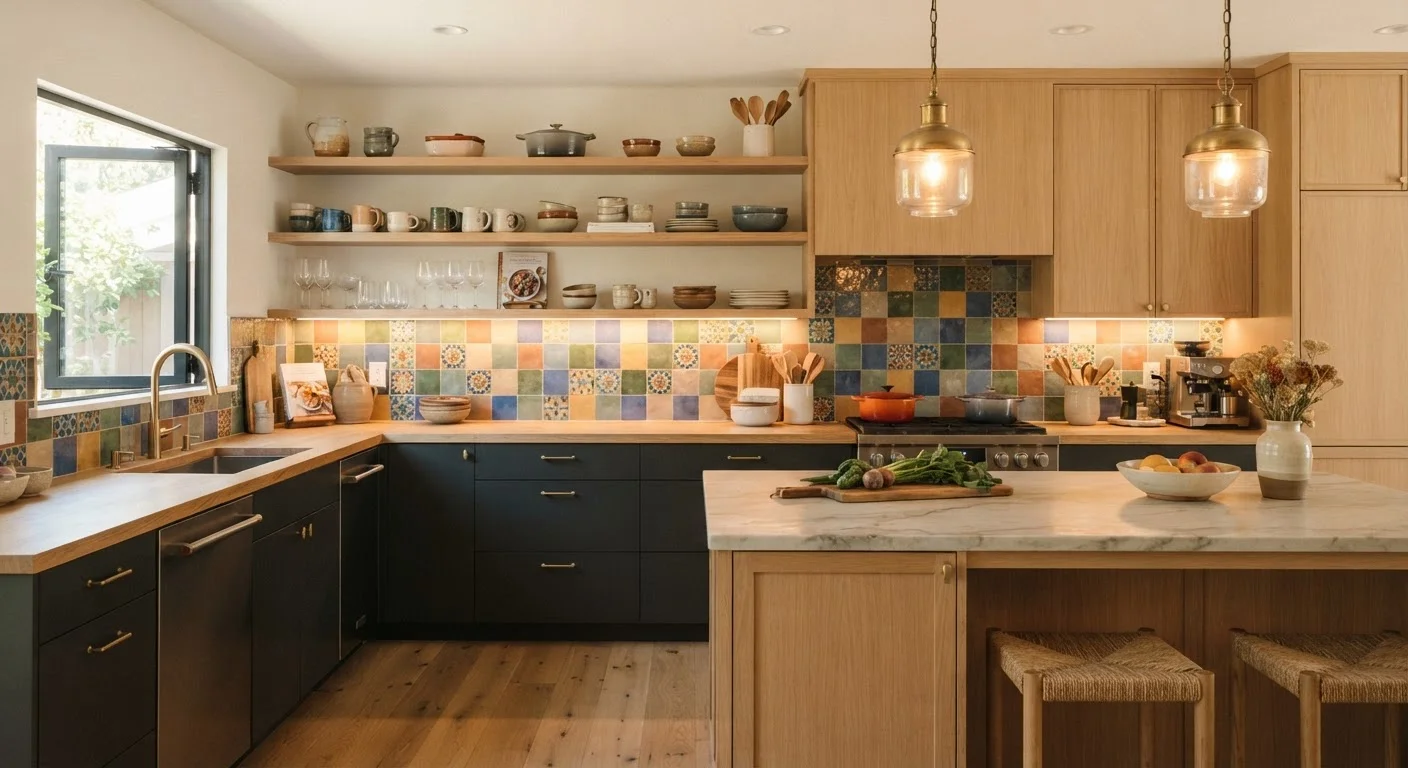
Open shelving is more practical than upper cabinets and makes kitchens look bigger.
Fact
Open shelving suits certain lifestyles and aesthetics but introduces real maintenance demands and isn't universally practical.
Items stored on open shelves collect grease and dust quickly in a cooking environment, requiring frequent wiping. Shelving also demands a level of visual organization that doesn't suit every household. It can make a kitchen feel more open when done well, but it can equally create a sense of visual noise if the contents are varied or frequently changed. The right choice depends on cooking habits, storage needs, and tolerance for upkeep. For a full side-by-side, see our comparison of open shelving versus upper cabinets.
Myth
All metals and finishes in a kitchen should match for a cohesive look.
Fact
Mixing metals intentionally is a well-established design technique that can add depth and visual interest.
Strict matching of every hardware finish, faucet, and appliance trim can produce a space that looks more like a showroom than a lived-in home. Designers commonly anchor a kitchen with one dominant finish and introduce one or two complementary ones as accents. The key is intentionality - a random mix can look chaotic, but a deliberate combination (for example, matte black handles paired with brushed brass lighting) tends to feel considered and current.
Myth
You need expensive, premium-grade materials to get a durable, attractive kitchen.
Fact
Mid-range materials, properly installed and maintained, often perform comparably to premium options for everyday households.
Material cost and material performance are related but not the same thing. Installation quality and ongoing maintenance typically have a greater impact on longevity than price tier alone. A moderately priced quartz countertop that is sealed correctly and wiped down regularly will generally outlast an expensive stone surface that isn't cared for. Budget decisions should weigh realistic usage patterns, not just aspirational aesthetics. For perspective on renovation spending and return, it's also worth reviewing common homeownership myths about renovation ROI.
Making Smarter Kitchen Decisions
The throughline across all these myths is that context matters enormously. A design choice that works beautifully in one kitchen - based on its size, natural light, household habits, and budget - may be a poor fit in another. Rigid rules ignore that reality.
~80%
of kitchen remodels driven by functional dissatisfaction
Industry surveys consistently find that most homeowners remodel kitchens because of how the space works, not primarily how it looks - underscoring the importance of function over trend.
3-5 years
Typical lifespan of a style-driven trend
Design analysts observe that purely trend-led kitchen choices often feel dated within a few years, while decisions grounded in practicality and personal use tend to age more gracefully.
For broader perspective on how design misconceptions affect the whole home, see our look at common decorating myths across every room. First-time homeowners setting up a kitchen from scratch may also find our foundational kitchen decoration guide a practical starting point. Two specific decisions - open shelving versus upper cabinets and whether to invest in a statement backsplash - deserve their own careful consideration rather than a reflexive yes or no.
Trend-Chasing Can Be Costly
Redecorating a kitchen around a short-lived trend - an extremely specific tile pattern, a novelty color that dominates one season - can result in a space that feels dated quickly and is expensive to change again. Prioritizing choices that suit your actual cooking and living habits tends to produce longer-lasting satisfaction than following what's popular at any given moment.
Approaching kitchen design with curiosity rather than conviction - testing assumptions before acting on them - tends to produce spaces that genuinely work for the people who use them every day.