Start With What You Already Have
Before you purchase a single item, take stock of what your kitchen already offers. Walk the space and note the cabinet style and condition, the flooring material, the direction natural light comes from, and how much counter space you realistically have to work with. These fixed elements are your starting constraints - and your best design partners.
First-time homeowners often skip this step and end up with decor that fights the room rather than complements it. A collection of rustic wooden accessories, for example, can look out of place in a kitchen with glossy, modern cabinetry. Understanding your baseline helps you make intentional choices instead of reactive ones.
If you're still early in the homeownership journey, the first-time home buyer guide is a useful companion for understanding how your new space fits into the bigger picture of ownership. Once you're ready to plan room by room, the pre-decoration checklist can help you avoid costly surprises.
Color palette
A limited set of two to three tones chosen to work consistently throughout a room, creating visual harmony without requiring every item to match exactly.
Task lighting
Focused light directed at a specific work area, such as under-cabinet lights aimed at a countertop, designed to improve visibility for cooking and prep.
Open shelving
Wall-mounted shelves without doors that display dishes, jars, and other items openly - functioning as both storage and decoration.
Visual rhythm
The repetition of similar colors, materials, or shapes throughout a space that gives the eye a consistent pattern to follow, making a room feel organized.
Surface materials
The physical materials used on countertops, backsplashes, and floors - such as tile, quartz, or wood - that carry significant visual and practical weight in a kitchen.
The Four Decisions That Shape Every Kitchen
Most kitchen decoration questions ultimately come back to four foundational decisions. Getting clear on these early saves time and money.
1. Color Palette
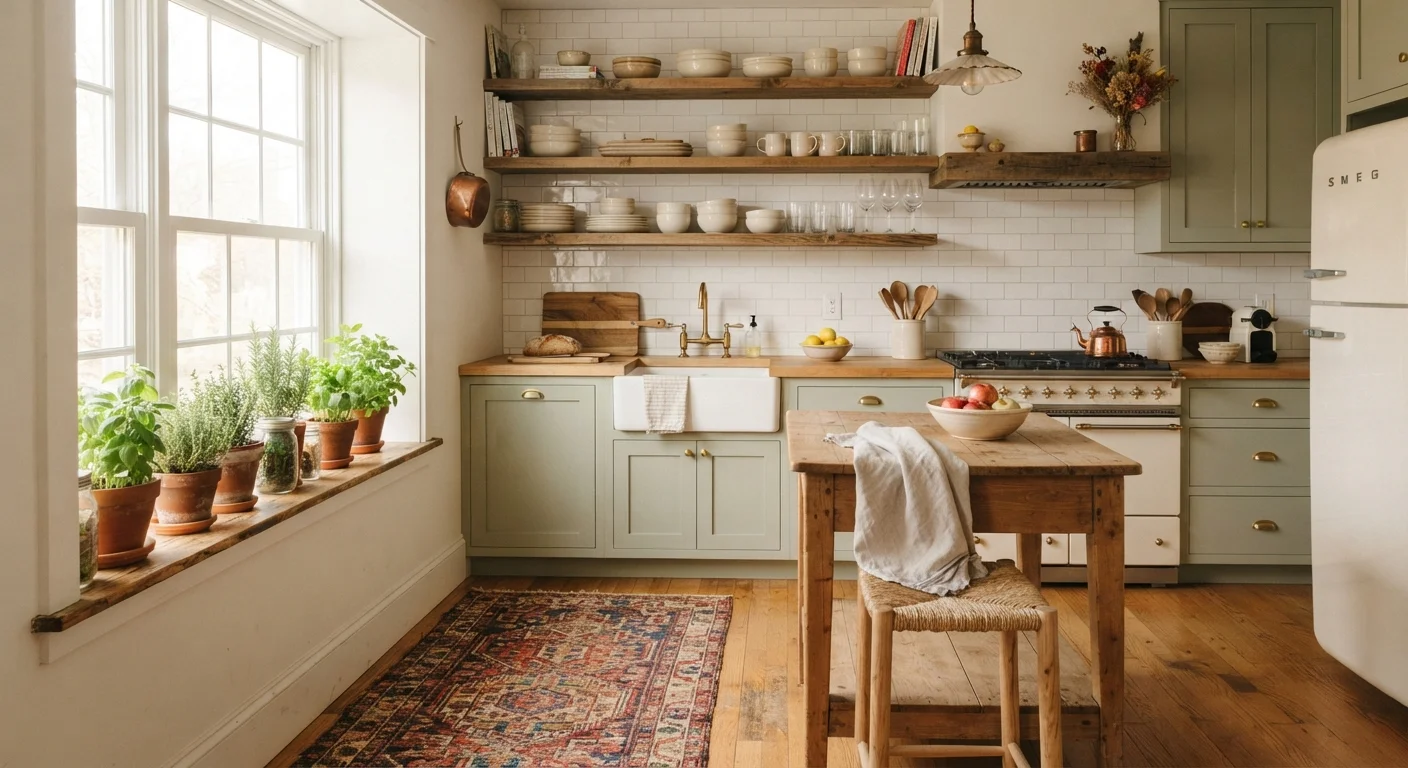
Choose two to three tones that work with your existing cabinets and flooring. Neutrals are forgiving and flexible, but a single accent color - through textiles, a painted wall, or open shelving - can give a kitchen real personality without overwhelming it.
2. Lighting
Kitchens need layered light: overhead for general visibility, task lighting under cabinets for prep work, and ambient or accent lighting for atmosphere. If your kitchen relies on a single overhead fixture, even a simple under-cabinet strip light can transform how the space feels and functions. Note that any electrical work should be handled by a licensed electrician.
3. Storage and Display
Functional storage is also decoration. Open shelving, a wall-mounted pot rack, or a freestanding island all affect how a kitchen looks while solving real organizational problems. The guide to kitchen clutter explains how storage missteps are often the hidden cause of a room feeling disorganized even after decorating.
4. Surface Materials
Countertops, backsplash tile, and flooring carry significant visual weight. If you're planning to update any of these, understanding what each material contributes is essential - the countertop materials overview breaks this down clearly.
Decide on a Direction Before Shopping
Before purchasing any decor, identify your preferred style direction - whether that's warm and rustic, clean and modern, or something in between. Even a simple mood board made from magazine clippings or saved images can help you stay consistent. Consistency across choices is what makes a kitchen feel intentional rather than assembled by accident.
Everyday Products That Pull a Kitchen Together
Some of the most effective kitchen decor isn't decorative at all - it's functional. A consistent set of canisters for dry goods, a well-placed cutting board, or a row of matching dish towels creates visual rhythm without requiring any structural change. These everyday household items do double duty: they simplify your routine and contribute to a cohesive look.
Plants are another low-cost, high-impact addition. Herbs like basil or rosemary thrive on a sunny windowsill and add color and life to a space that can otherwise feel purely utilitarian. The kitchen plant guide covers which varieties do well in typical kitchen conditions and how to display them effectively.
Rugs near the sink or stove can add warmth, but they come with trade-offs around maintenance. The kitchen rug guide gives an honest assessment of what to consider before adding one. For a broader view of how color, texture, and lighting work together as a system, the kitchen cohesion guide is worth reading alongside this one.
Renting? Reversible Options Exist
If you're decorating a kitchen you rent rather than own, most permanent changes aren't an option. Peel-and-stick backsplash panels, freestanding shelving, and removable hooks can create a similar effect without altering the space. The rental kitchen decoration guide covers these approaches in more detail.
Common Beginner Mistakes to Sidestep
First-time homeowners tend to share a handful of recurring decoration missteps. Being aware of these upfront can save both money and frustration.
- Buying everything at once. Decorating in phases gives you time to see how each addition interacts with the room before committing to more.
- Over-accessorizing counters. Counter space is a premium in most kitchens. Limit what sits out to items you use daily.
- Relying on design myths. Claims like "white kitchens always feel bigger" or "dark cabinets are impossible to keep clean" often don't hold up in practice. The kitchen decoration myths article fact-checks the most common ones.
- Ignoring scale. A small rug in a large kitchen, or oversized pendant lights in a narrow galley, immediately disrupts proportion. Measure before you purchase.
Electrical and Plumbing Work Requires Professionals
Any decoration plan that involves moving or adding outlets, installing new lighting circuits, or changing plumbing lines requires licensed tradespeople and likely a permit. Unpermitted work can create safety hazards and complications when selling your home. Always verify local code requirements with your building department before starting.
Where to Go From Here
This guide gives you a foundation, but kitchen decoration is a layered process. Once you understand your baseline and have made the four core decisions, you're ready for more detailed planning. The room-by-room planning guide walks through every decorating decision in a logical sequence - a natural next step after this introduction.
For broader inspiration across your home, the Home Décor Tips hub collects ideas for styling and personalizing every room. And if you're considering any improvements that go beyond cosmetic updates, the first home renovation roadmap covers planning, safety, and when to call in a professional.
Kitchen decoration rewards patience and intentionality. Start with what you know, build in phases, and let the room guide your choices as much as any trend or inspiration board does.