What Kitchen Rugs Actually Do for a Space
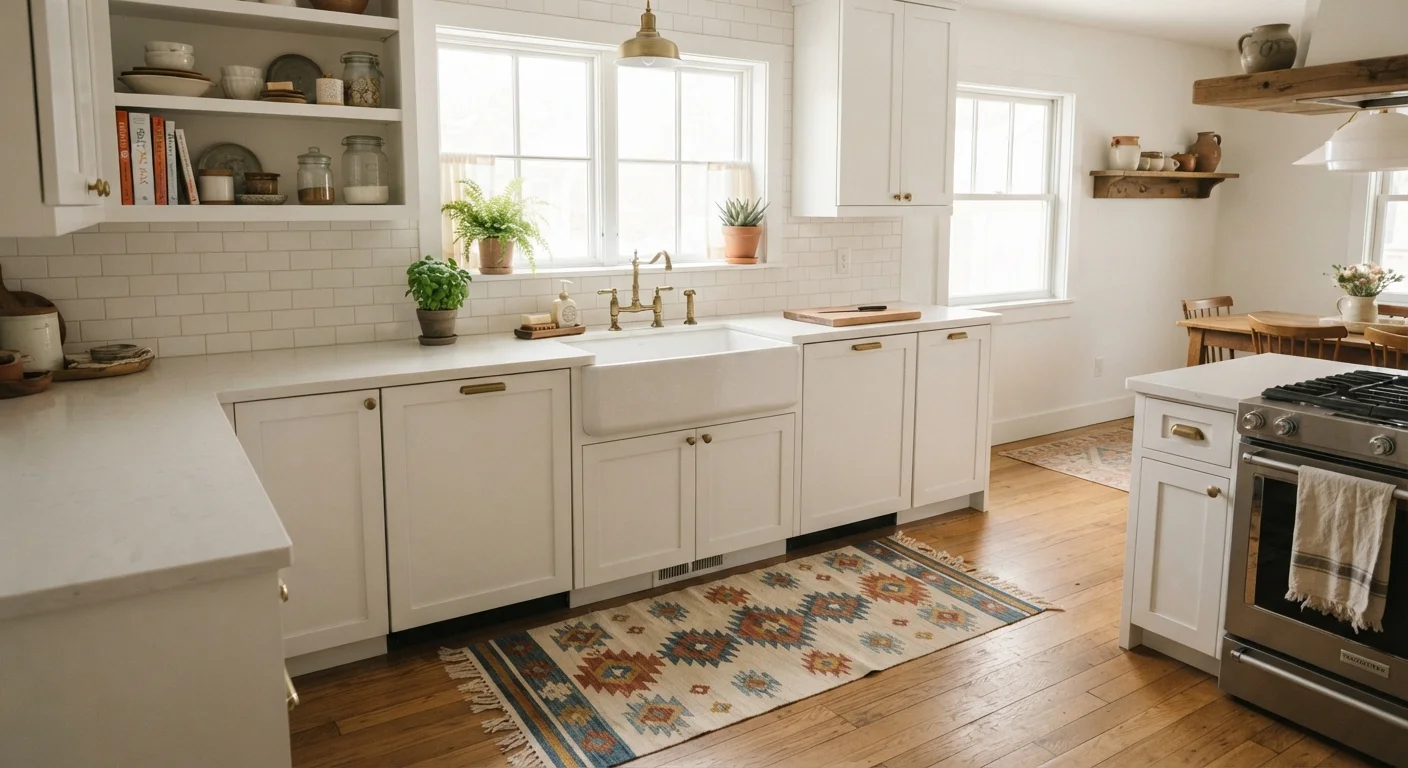
A kitchen rug does several things simultaneously: it softens hard flooring underfoot, introduces color or pattern at eye-catching floor level, and visually anchors zones like the sink area or a breakfast nook. Unlike most kitchen upgrades, a rug is non-permanent, making it a popular choice for renters - see our guide on decorating a rental kitchen without permanent changes for related ideas.
Beyond aesthetics, standing on a cushioned surface for extended periods - while cooking or washing dishes - reduces foot and lower-back fatigue compared to standing directly on tile or hardwood. This comfort benefit is tangible and often underappreciated when people first consider a kitchen rug.
Reduces foot fatigue during extended cooking sessions
Standing on cushioned material for long periods measurably reduces strain on feet, knees, and lower back compared to hard flooring. This benefit is most pronounced for people who cook frequently.
Adds color, texture, and visual warmth affordably
A rug is one of the lowest-cost ways to introduce a design statement in the kitchen. It can tie together cabinetry tones, complement a backsplash, or simply make a utilitarian space feel more inviting.
Non-permanent and renter-friendly
Unlike tile, paint, or built-in fixtures, a rug leaves no trace when removed. This makes it a practical decoration option for renters who want to personalize their kitchen without risking their security deposit.
Protects flooring from scratches and dropped items
A rug in front of high-use areas like the sink or prep counter can absorb impact from dropped utensils and reduce surface scuffing from foot traffic over time.
Defines zones in open-plan kitchens
In kitchens that flow into dining or living areas, a rug can visually separate the cooking zone from adjacent spaces without any structural changes.
The Real Upkeep Demands
The kitchen is one of the most demanding environments for any textile. Grease particles, food debris, and moisture from the sink accumulate quickly, and a rug that isn't laundered regularly can harbor bacteria and odors. Most households with active cooking routines will need to wash or thoroughly shake out a kitchen rug at least once a week.
1×/week
Minimum recommended cleaning frequency
Home cleaning authorities generally suggest laundering or thoroughly shaking out kitchen rugs at least once weekly in active cooking households.
~80%
Of kitchen falls linked to floor-level hazards
According to general home safety guidance, the majority of in-home kitchen falls involve slippery or uneven floor surfaces, including unsecured rugs.
Material choice determines how manageable that maintenance actually is. Flatweave cotton rugs tend to be machine-washable and dry quickly - two features that make upkeep realistic. Thick pile rugs or those with jute construction absorb moisture more readily and are harder to dry thoroughly, raising the risk of mildew beneath the rug or within the fibers.
Grease and moisture accumulate rapidly
Kitchen air carries fine grease particles from cooking that settle into rug fibers quickly. Near the sink, water splash compounds the problem, creating conditions that require frequent cleaning to stay hygienic.
Slip risk on smooth flooring without proper backing
A rug without effective non-slip backing can shift or bunch on tile or hardwood, creating a fall hazard. Non-slip backing also degrades with repeated washing and should be checked periodically.
Certain materials are difficult to dry thoroughly
Thicker pile rugs and natural fibers like jute retain moisture, which can lead to mildew growth beneath the rug or within the fabric if not dried completely between washes.
Curled edges become a tripping hazard over time
High-traffic areas cause rug edges and corners to curl upward. This is especially common near appliances where foot movement is repetitive and directional.
Wrong pattern can amplify visual clutter
A busy rug pattern in an already visually complex kitchen can work against the space, making it feel smaller and more chaotic rather than cohesive and welcoming.
Safety Considerations You Shouldn't Overlook
A rug without adequate non-slip backing on a smooth kitchen floor is a genuine slip hazard - particularly in households with older adults, young children, or anyone with limited mobility. Even rugs sold with rubber backing can lose grip over time or after repeated washing, so it's worth periodically checking that the rug lies flat and doesn't shift underfoot.
Check Non-Slip Backing After Each Wash
Rubber or latex non-slip backings can degrade with heat and repeated laundering. Always air-dry or use low heat when washing a kitchen rug, and test its grip on your floor after washing by pressing down firmly on each corner. If the rug shifts noticeably, a separate non-slip rug pad placed underneath can restore safe traction.
Curled edges are another common issue. Rugs near high-foot-traffic areas like the stove or refrigerator can develop turned corners that catch feet mid-stride. Rug tape or heavier flatweave constructions tend to reduce this risk. If you're working through a broader kitchen refresh, the kitchen redecorating checklist includes flooring and layering decisions worth reviewing before you commit.
Making the Decision for Your Kitchen
The right question isn't whether kitchen rugs are good or bad in general - it's whether the tradeoffs make sense for your specific household. A single adult who cooks light meals and has an easy-care rug may never find it burdensome. A family of four who cooks daily and has pets may find the upkeep tips from manageable into genuinely taxing.
Visual fit matters too. A rug in a pattern that competes with busy cabinetry or a bold backsplash can actually make the kitchen feel more cluttered rather than more welcoming. For more on that dynamic, why your kitchen feels cluttered even after decorating explores common decorating missteps. If you're starting from scratch, kitchen decoration for first-time homeowners offers a grounded framework for layering in accessories like rugs at the right stage of the process.