Why the Kitchen Is a Unique Environment for Plants
Kitchens are dynamic spaces - temperatures spike when the oven runs, humidity rises during boiling and dishwashing, and light can shift dramatically depending on window placement. These conditions rule out many common houseplants but actually create ideal circumstances for others.
Understanding your specific kitchen before buying a single plant saves time, money, and frustration. Start by noting your window orientation. South-facing windows deliver the most consistent direct light, making them suitable for sun-loving herbs like basil and rosemary. North-facing windows offer lower, diffuse light - a better fit for shade-tolerant varieties like pothos or ferns. East and west exposures fall in between, supporting a broader range of plants with some afternoon or morning direct sun.
Humidity is worth considering too. Kitchens near dishwashers or stovetops tend to run more humid, which suits tropical plants that struggle in dry living rooms. However, positioning plants directly above heat sources - such as a range hood or oven - subjects them to temperature extremes that most plants cannot tolerate. For a broader look at how environmental factors shape your kitchen's character, see our guide to kitchen lighting.
Match the Plant to the Real Conditions
It's tempting to choose plants based on aesthetics alone, but a plant that isn't suited to your kitchen's actual light and temperature will decline quickly. Spending five minutes observing your kitchen's conditions before shopping pays off significantly in the long run.
Best Plant Varieties for Kitchen Conditions
Certain plants have earned their reputation as kitchen staples because they genuinely perform well under imperfect conditions.
Herbs
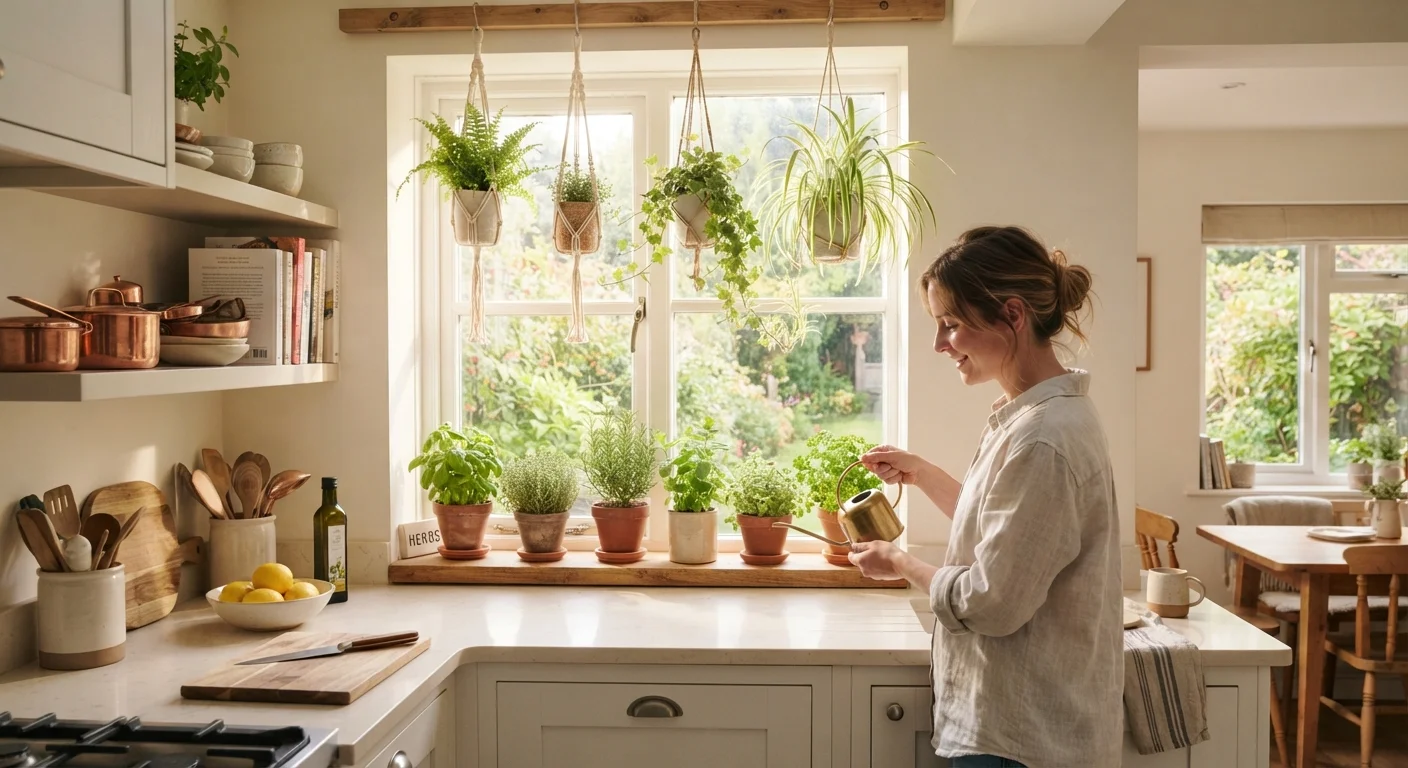
Culinary herbs are an obvious starting point - they're functional and decorative. Basil needs bright, direct light and warmth, so a sunny south-facing sill is ideal. Mint tolerates partial shade and actually prefers consistently moist soil, making it well-suited to the kitchen's higher humidity. Chives are forgiving of variable light and can be snipped continuously without harming the plant. Keep herbs in pots with drainage holes and avoid letting water pool in saucers, which encourages root rot.
Trailing and Vining Plants
Pothos (Epipremnum aureum) is arguably the most adaptable houseplant available. It tolerates low light, irregular watering, and fluctuating temperatures - all common in kitchens. Its trailing habit makes it an elegant choice for high shelves or cabinet tops where vines can cascade downward. Heartleaf philodendron behaves similarly and is equally forgiving.
Compact Foliage Plants
Spider plants handle indirect light well and appreciate the ambient moisture near a sink. Aloe vera suits a sunny windowsill and has the added practical benefit of soothing minor kitchen burns, though it should be kept dry between waterings and never left in standing water.
For broader guidance on using greenery as a deliberate design element, the design principles for placing indoor plants article covers scale, grouping, and visual roles in detail.
What you will need
How to Display Kitchen Plants Effectively
Placement and presentation matter as much as plant selection. The goal is to integrate greenery naturally into the kitchen without obstructing workspace or creating maintenance headaches.
In smaller kitchens, vertical space is your friend. Wall-mounted planters, magnetic herb pods on a refrigerator surface, or a tiered plant stand in a corner all add greenery without consuming counter space. See the decoration strategies for compact kitchens for more ideas on maximising impact in tight spaces.
Container choice shapes the overall aesthetic. Terracotta pots suit a rustic or farmhouse kitchen and provide excellent drainage. Ceramic planters in matte finishes work well in modern or minimalist spaces. Glass containers can be used for propagating cuttings in water - a low-cost and visually interesting display option.
Grouping plants in odd numbers (three or five) tends to look more natural than symmetrical pairs. Vary heights by using a plant stand, a stack of books, or a raised wooden platform. This layering effect creates visual depth without requiring a large surface area.
Keep Toxic Plants Away from Children and Pets
Several popular houseplants - including pothos and philodendron - are toxic if ingested by children or pets. If either is present in your home, place these plants on high shelves out of reach, or opt for non-toxic alternatives such as spider plants, herbs, or Boston ferns. Always verify toxicity information before introducing a new plant to your kitchen.
First-time homeowners decorating their kitchens for the first time will find foundational display advice in our kitchen decoration guide for new homeowners.