Why One Overhead Light Is Never Enough
Most kitchens ship from builders with a single ceiling fixture - functional enough, but flat. A lone overhead light casts uniform brightness that creates harsh shadows on countertops, makes food look less appetizing, and fails to adapt as your needs shift from morning coffee to evening dinner parties.
The reason layered lighting feels so different is that it gives you control over zones and intensity. The counter where you prep vegetables has different lighting needs than the table where you eat or the open shelving you want to highlight. When each zone has its own light source, you can address those needs individually.
This layering concept applies across your whole home - the three-level lighting approach covers ambient, task, and accent light in any room. In kitchens specifically, all three play distinct and important roles.
~90%
Of kitchen tasks happen at counter level
Lighting designers commonly note that most food prep, cleaning, and assembly occurs on countertops, making under-cabinet task lighting one of the most functional investments in a kitchen.
2700K-3000K
Warm white range preferred for residential kitchens
Interior lighting guidelines from organizations like the Illuminating Engineering Society suggest warm white tones for living areas to promote comfort and visual ease.
3 layers
Lighting types recommended by design professionals
Ambient, task, and accent lighting are the three standard layers referenced in residential lighting design to balance functionality and aesthetics.
The Three Layers and What Each One Does
Ambient Lighting
This is your foundation - the general illumination that fills the room. Recessed ceiling lights (also called can lights) and flush-mount fixtures are common choices. Ambient light shouldn't be so bright that it's harsh, but it needs to be sufficient that you can navigate the room safely without squinting.
Task Lighting
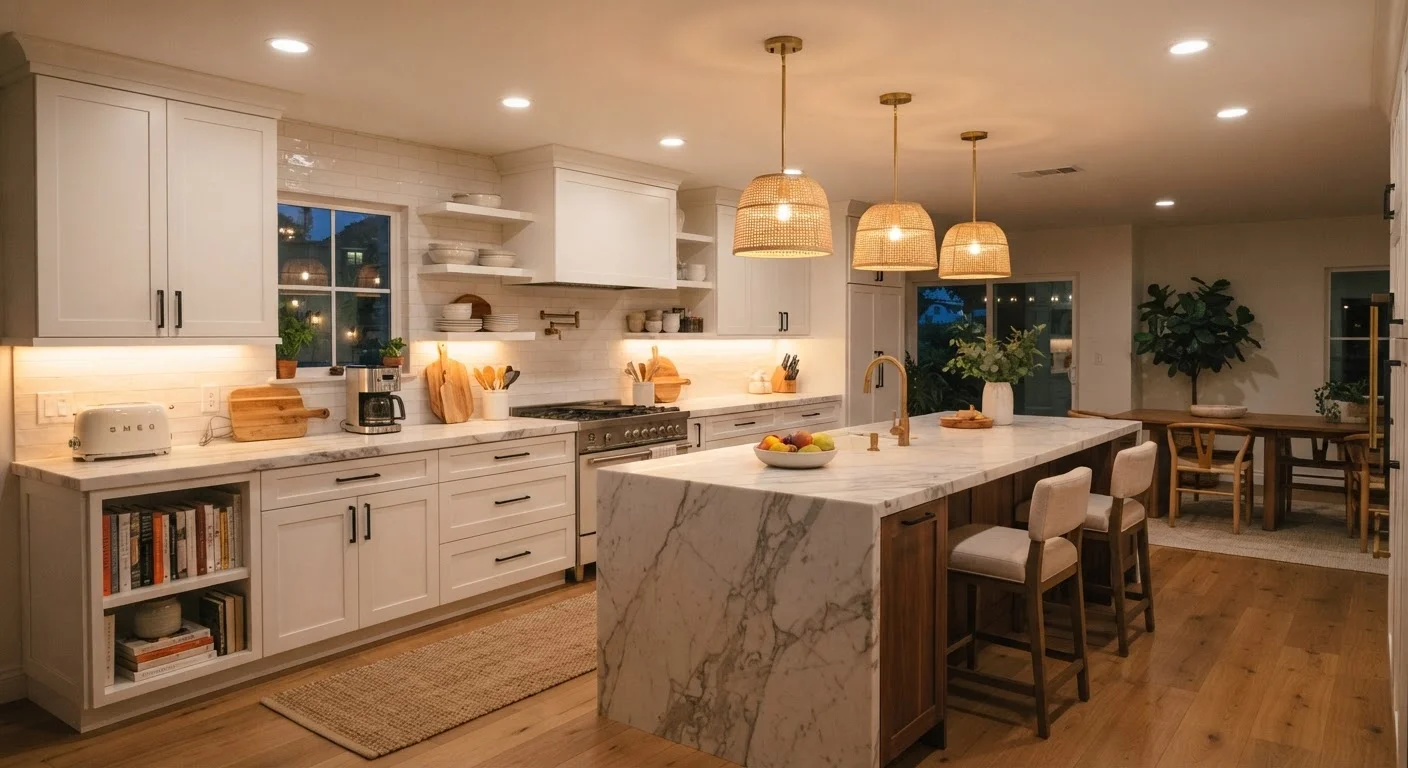
Task lighting targets specific work surfaces. Under-cabinet lights are the most impactful kitchen upgrade many homeowners overlook - they shine directly onto countertops, eliminating the shadow your own body casts when working under overhead lights. Pendant lights over an island serve a similar purpose while adding visual character.
Accent Lighting
Accent lighting is less about function and more about atmosphere. Toe-kick lighting along the base of cabinetry creates a subtle floating effect. LED strip lights inside glass-front cabinets draw the eye to displayed items. These details signal intention and give a kitchen personality.
How these layers come together is also part of what makes a kitchen feel visually unified. The elements that make a kitchen feel cohesive include lighting alongside color, texture, and hardware.
Test Before You Commit
Before buying multiple fixtures or bulbs of the same type, try one first and observe how it looks at different times of day and against your cabinet and countertop finishes. Color temperature can appear quite different under showroom lighting versus your actual kitchen. A small upfront test can save you from replacing a whole set.
Color Temperature: The Invisible Mood-Setter
Beyond the placement of fixtures, the quality of light matters enormously. Color temperature - measured in Kelvin - determines whether light reads as cool and clinical or warm and welcoming.
- 2700-3000K (warm white): Creates a cozy, residential feel. Works well for ambient and dining zones.
- 3500-4000K (neutral white): A middle ground - clean without being cold. Popular for task lighting in modern kitchens.
- 4000-5000K (cool white): Crisp and energizing. Useful for task-heavy prep areas but can feel sterile if overused.
Mixing very different temperatures across a small space tends to look inconsistent. A practical approach is to keep ambient and accent lights in a warm range and limit cooler temperatures to dedicated task zones.
Color temperature also interacts with your kitchen's finish palette. Warm light flatters wood tones and warm neutrals, while cooler light pairs naturally with white cabinetry and stainless steel. If you're exploring different kitchen aesthetics, the guide to kitchen design styles explains how lighting choices fit different looks.
Simple Upgrades That Make a Real Difference
You don't need a full renovation to improve your kitchen's lighting. Several changes are straightforward and don't require permits or licensed contractors:
- Add under-cabinet lights. Plug-in puck lights or LED strip lights require no wiring. They're among the highest-impact, lowest-effort lighting changes available.
- Install a dimmer switch. Many standard wall switches can be replaced with dimmers. Check that your existing bulbs are dimmer-compatible before purchasing. Note: electrical work should be done carefully and, where required by local code, by a licensed electrician.
- Swap bulb color temperatures. Changing bulbs in existing fixtures to a warmer or cooler Kelvin rating costs little and can noticeably shift the room's feel.
- Add a statement pendant. If your island or peninsula lacks a dedicated fixture, a pendant - installed by a qualified electrician - adds both focused light and a design focal point.
Lighting also works alongside other non-structural elements that shape a room's mood. For contrast, consider how soft furnishings influence atmosphere - textiles and light together define how a space feels to live in.