Why Design Style Matters Before You Shop
Most kitchen decorating frustrations stem from decisions made in isolation - a cabinet pull chosen without considering the faucet finish, or a countertop selected before a color palette is established. Knowing your design style solves this problem. It gives you a filter for every future choice.
Design styles aren't about following trends. They're about identifying a visual language your space will consistently speak. Once you can name the style you're working toward, selecting countertop materials and fixtures becomes significantly more focused. See also how color, texture, and hardware work together for a complete look.
Start With a Style Anchor, Not a Wishlist
Before collecting product ideas, identify one or two non-negotiable elements that define your target style - a specific cabinet profile, a countertop material, or a hardware finish. Every other choice can then be evaluated against those anchors. This prevents the common outcome of a kitchen that looks assembled rather than designed.
Farmhouse Style: Warmth, Texture, and Character
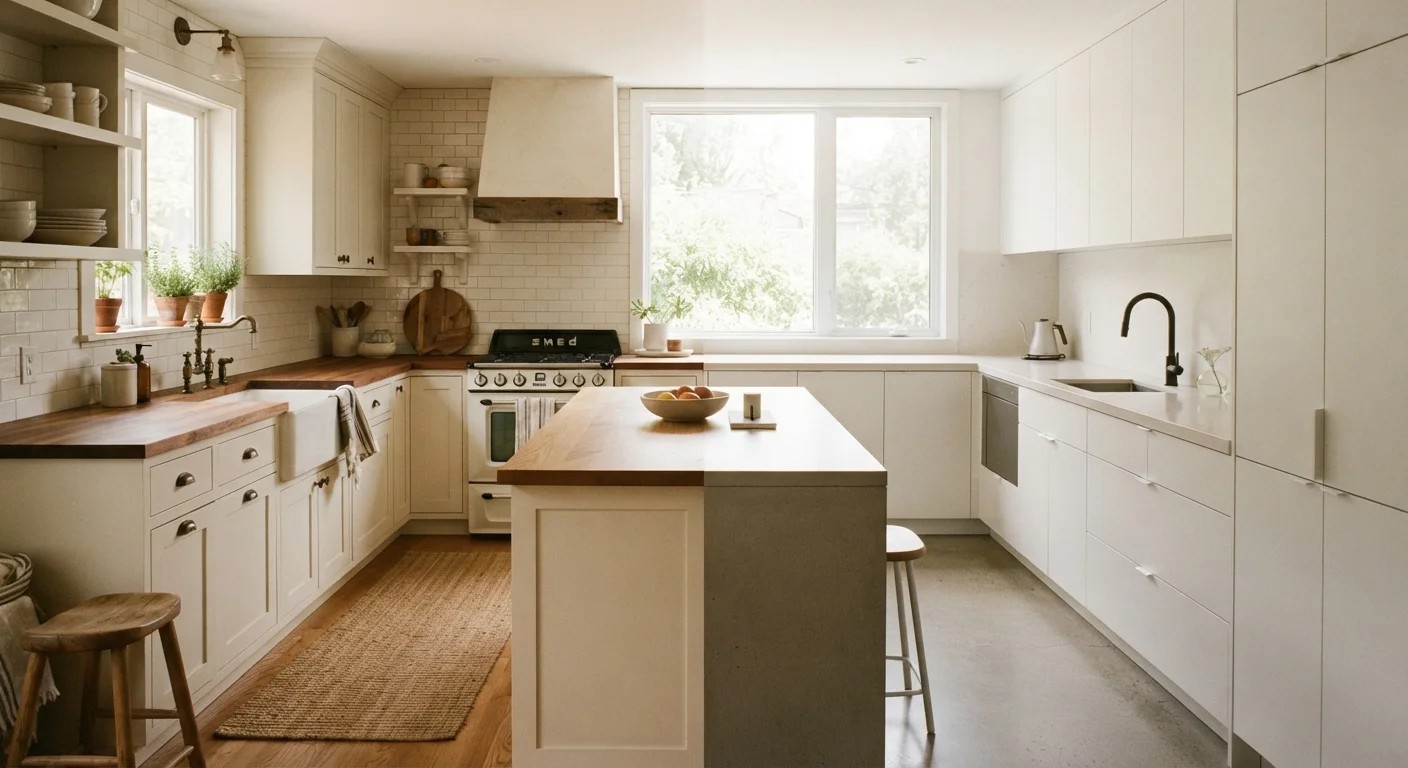
Farmhouse kitchens draw from rural American and European country traditions, emphasizing materials that feel lived-in and handcrafted. The defining features include:
- Shaker-style cabinets - flat center panels framed with a simple border, usually painted in soft whites, creams, or sage greens
- Apron-front (farmhouse) sinks - a large single basin that extends slightly beyond the cabinet face
- Natural materials - butcher block countertops, subway tile, beadboard paneling, and open wood shelving
- Vintage-style hardware - matte black, oil-rubbed bronze, or brushed brass pulls and knobs
Farmhouse style works well in homes with traditional architecture and benefits from generous natural light. It's one of the more forgiving styles for households with children, since its warm palette and textured surfaces hide everyday wear gracefully.
~45%
US homeowners preferring white or off-white cabinetry
Industry surveys from kitchen and bath associations have consistently shown white and off-white as the most selected cabinet colors in US kitchen renovations.
Top 3
Most requested styles: transitional, farmhouse, modern
National kitchen design surveys regularly rank transitional, farmhouse, and contemporary/modern as the three styles most frequently requested by homeowners during renovation consultations.
60-70%
Kitchen remodels that include cabinet updates
According to remodeling industry data, cabinet replacement or refinishing is present in the majority of full kitchen renovation projects, making cabinet style the single largest driver of aesthetic outcome.
Minimalist Style: Restraint as a Design Choice
Minimalist kitchens operate on a simple principle: every visible element earns its place, and anything that doesn't must be hidden. This translates to:
- Flat-front (slab) cabinets with integrated pulls or touch-latch hardware
- Monochromatic or near-neutral palettes - white, off-white, warm gray, or matte black
- Concealed appliances - panel-ready refrigerators and dishwashers blended into cabinetry
- Uncluttered countertops with storage designed to absorb everything
Achieving a minimalist kitchen requires thoughtful storage planning upfront. Without sufficient cabinet and drawer space, the style is difficult to maintain day-to-day. If you're working with a smaller footprint, spatial strategies for compact kitchens can help you plan storage before committing to this aesthetic.
Transitional, Modern, and Industrial: The Other Major Styles
Transitional kitchens sit between traditional and contemporary. They typically use shaker cabinets (traditional) with simple hardware and quartz countertops (contemporary). The palette leans neutral but may include one warmer wood tone. This style's flexibility makes it particularly well-suited to resale scenarios.
Modern kitchens emphasize horizontal lines, geometric forms, and materials like stainless steel, glass tile, and concrete. Unlike minimalism, modern design allows visual interest through materials - a concrete countertop or a bold backtile contributes to the aesthetic rather than distracting from it.
Industrial kitchens borrow from commercial and warehouse aesthetics: exposed ductwork, open pipe shelving, raw brick or concrete surfaces, and matte or blackened metal hardware. This style suits loft-style spaces and urban homes more naturally than traditional residential architecture.
“The best kitchen design is the one you can actually live in. Style is a starting point, not a constraint - the goal is a space that functions for your daily life and happens to look intentional.”
— National Kitchen and Bath Association, Industry trade organization for kitchen and bath design professionals
First-time decorators can find a more detailed breakdown of these foundational choices in our guide to kitchen decoration for first-time homeowners.
How to Identify the Right Style for Your Kitchen
Rather than selecting a style based solely on what you find visually appealing in photos, consider three practical factors:
- Your home's architecture. A craftsman bungalow has built-in warmth that fights against a stark minimalist kitchen. A new construction home with flat ceilings and simple trim detail suits contemporary styles naturally.
- How you actually use the kitchen. Households that cook daily and gather frequently often find open, warm styles - farmhouse, transitional - easier to live with. Minimalist kitchens require more daily discipline to maintain their look.
- Your flexibility with color and materials. If you're uncertain, transitional is the most forgiving starting point. It leaves room for evolution without requiring a complete rethink if your tastes shift.
For smaller spaces, some styles are more practical than others. Our guide on decoration strategies for compact kitchens explores how style choices interact with limited square footage. If you're approaching a full refresh, decorating from scratch offers a structured way to move through every decision in order.
Style Labels Are Descriptive, Not Definitive
Design style names like 'farmhouse' or 'minimalist' are shorthand for clusters of visual choices - they aren't trademarked specifications. Two designers might interpret 'modern farmhouse' quite differently. When working with contractors or shopping for fixtures, describe the specific elements you want (cabinet profile, hardware finish, countertop material) rather than relying on style names alone to communicate your vision.