Think of Plants as Design Elements, Not Just Living Things
A plant placed in a corner as an afterthought rarely contributes to a room's design. But a plant chosen deliberately - for its height, leaf shape, color, or texture - can anchor a space just as effectively as a piece of furniture. The key is approaching greenery with the same intentionality you'd bring to any other décor decision.
Interior designers typically evaluate plants along the same axes as other objects: scale (how large the plant is relative to the room), form (its overall silhouette), texture (fine, bold, or trailing), and color (the spectrum of greens, plus variegation). Understanding these properties helps you place plants where they'll contribute most. For a deeper look at these terms, see our plain-language interior design reference.
“Plants in interior spaces don't just introduce color - they introduce a sense of scale, organic texture, and the impression that a space is cared for. That's difficult to achieve with any other single design element.”
— Design Educator, Interior design instructor and published author on residential aesthetics
Scale and Proportion: Sizing Plants to Their Setting
One of the most common planting mistakes is choosing a plant that's the wrong size for its surroundings. A small succulent on a large empty floor reads as lost; a towering plant crammed beside a low sofa feels chaotic. Use these general principles to calibrate:
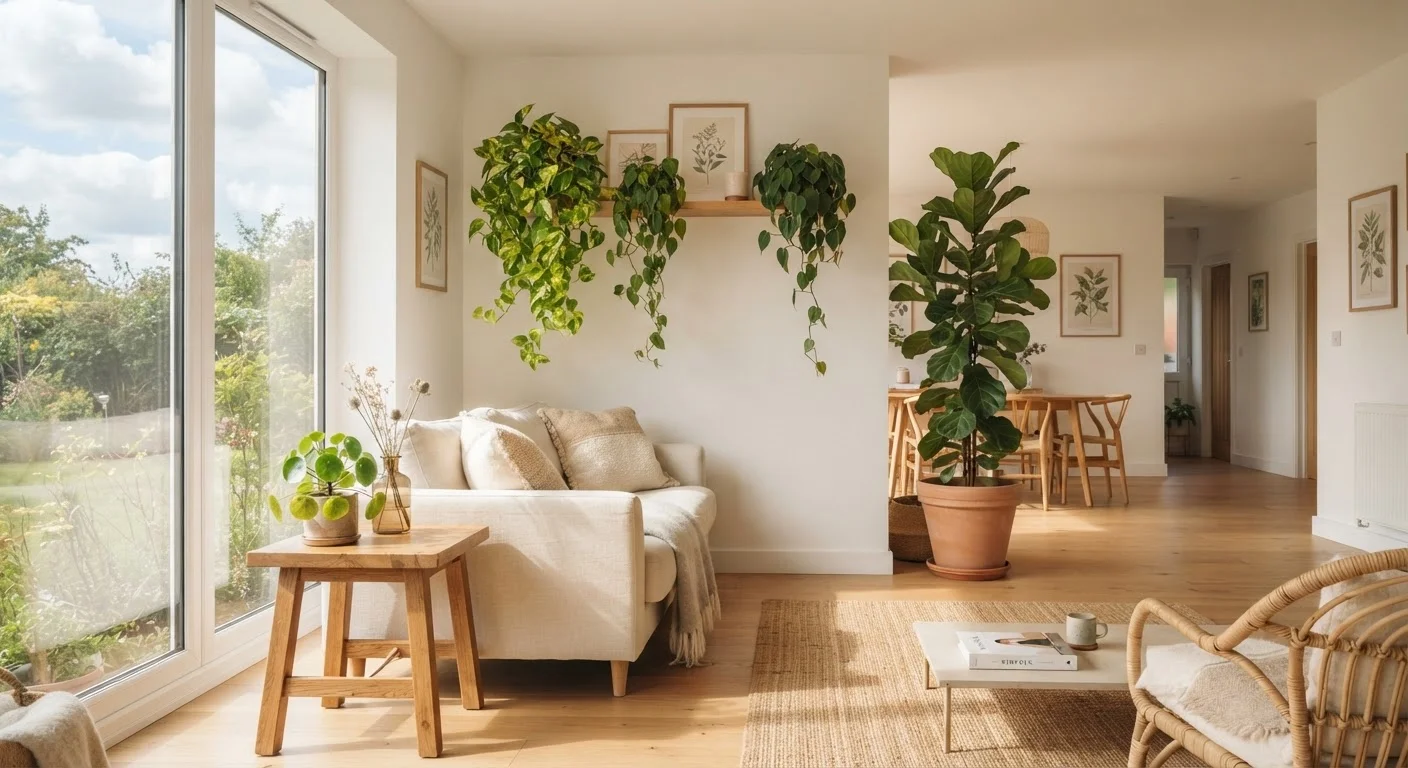
- Floor plants work best when they reach at least two-thirds the height of the wall or adjacent furniture. In rooms with high ceilings, dramatic upright plants reinforce vertical space.
- Tabletop plants should sit below eye level when you're seated, so they invite rather than obstruct sightlines.
- Shelf and ledge plants benefit from trailing varieties, which soften hard edges and draw the eye along a surface.
Scale also matters in small rooms. Rather than avoiding large plants entirely, consider a single statement plant placed deliberately - this can make a compact room feel more curated. See our guide on small-space decorating strategies for more context on this approach.
~10%
Rule of thumb for plant-to-room visual weight
Design practitioners often suggest that greenery should occupy roughly 10% of a room's visual field to feel intentional without overwhelming other design elements - a guideline drawn from general proportion principles rather than a single study.
3-5
Ideal grouping size for maximum visual interest
The rule of odd numbers - groupings of three or five - is a foundational principle in visual design, applied across floral arrangement, landscape design, and interior styling.
Grouping, Focal Points, and Visual Flow
Individual plants can accent, but groups of plants carry real visual weight. When clustering plants, designers often rely on the rule of odd numbers - groupings of three or five tend to feel more dynamic than pairs or quads. Vary the heights within the group so the eye moves rather than rests flat.
Plants can also serve as a room's focal point when placed intentionally. A large, architecturally shaped plant positioned opposite the room's entry point becomes the first thing a visitor sees - which is exactly how focal points work in design. Alternatively, a row of similar plants along a windowsill or shelf creates rhythm, a sense of repetition that guides the eye across a wall.
Plants also work as soft room dividers in open-plan spaces. A grouping of tall plants between a dining area and living area suggests a boundary without closing off light or airflow.
Match plant form to its intended visual role before you choose a species.
Upright plants draw the eye upward and create height; spreading plants fill horizontal space; trailing plants soften edges and add movement. Choosing form first prevents mismatches where a plant's growth habit works against the arrangement.
Use odd-number groupings when clustering plants on a surface.
Groups of three or five create asymmetry, which the eye reads as more dynamic and natural than symmetrical pairs. Varying height within the group reinforces this effect.
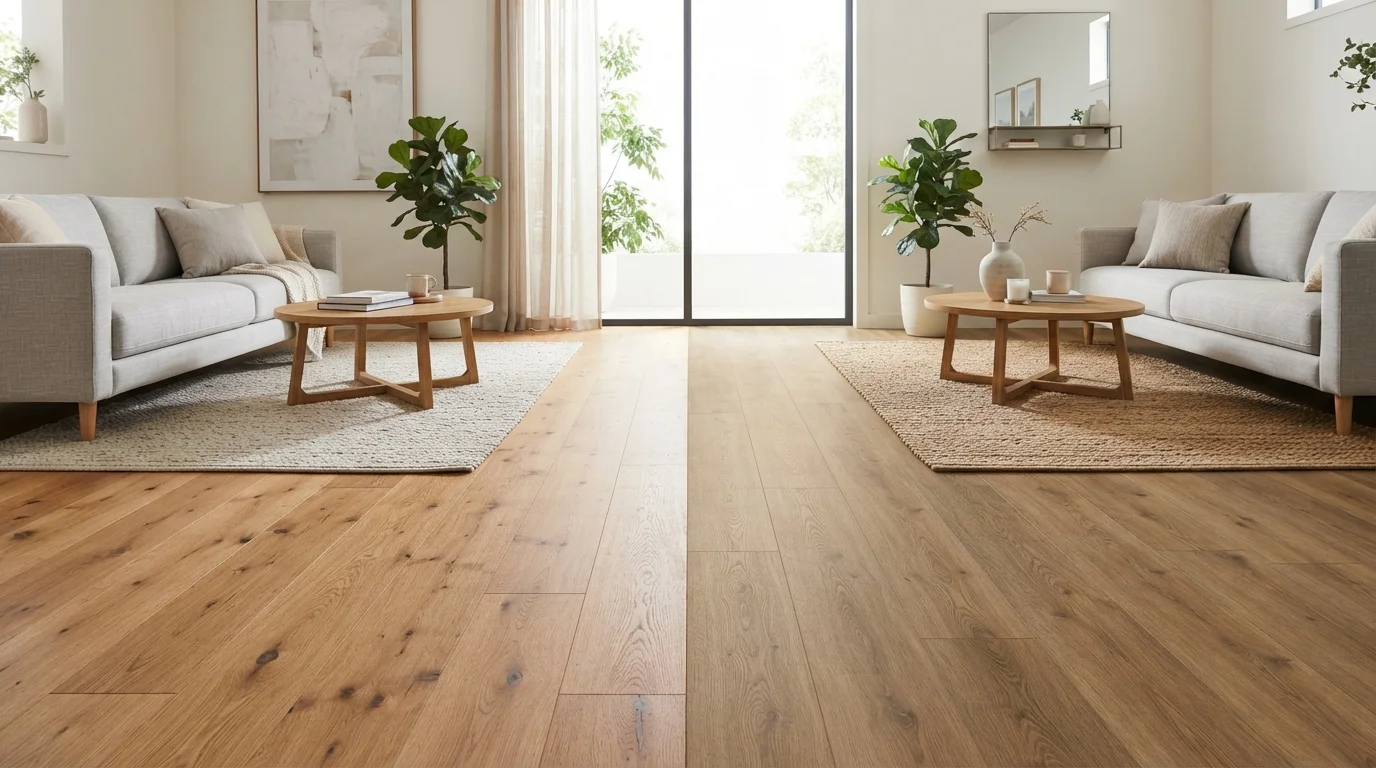
Repeat a single plant species or pot style across a room to create visual rhythm.
Repetition is one of the core tools of interior design. A recurring element - even a simple terracotta pot - ties disparate areas of a room together and prevents a collection from looking cluttered.
Leave negative space around statement plants rather than surrounding them with other objects.
A large or architecturally interesting plant needs room to read clearly. Crowding it with other décor reduces its visual impact and makes the grouping feel busy rather than intentional.
Use plant height to address vertical dead zones in a room.
Many rooms have strong horizontal arrangements - sofas, tables, shelves - but lack visual interest above eye level. A tall floor plant or a hanging specimen adds life to the upper third of a room without requiring architectural changes.
Light First, Aesthetics Second
Every placement decision has to begin with an honest assessment of light. A plant placed in a dim hallway for visual effect will decline quickly if it requires bright conditions. Before choosing where a plant will live, observe how much natural light the spot receives and for how long during the day.
Our article on natural vs. artificial light in interior design explains how light quality varies by window direction and time of day. As a general rule: south- and west-facing windows offer stronger light, north-facing windows provide gentle, diffuse light suited to low-light plants, and east-facing windows deliver bright morning sun that suits many moderate-light varieties.
If your preferred placement spot has limited natural light, grow lights can extend your plant options - but match the light output to the plant's needs, not just your design preference.
Rotate Plants Periodically for Even Growth
Most houseplants grow toward the light source. If left in the same position, they can become lopsided over time - which affects both health and how they look as a design element. Rotating plants a quarter turn every week or two encourages even, symmetrical growth and keeps them looking their best in situ.
Room-by-Room Application
Different rooms present different opportunities and constraints:
- Living rooms offer the most flexibility. Floor plants, hanging specimens, and tabletop arrangements can all coexist if you manage scale and leave breathing room between pieces.
- Bedrooms benefit from calmer, lower-maintenance plants. Avoid overcrowding - one or two well-chosen plants tend to feel more restful than a collection.
- Kitchens suit compact, humidity-tolerant plants displayed near windows or on open shelving. For specific guidance, see plants in the kitchen and small kitchen decoration strategies.
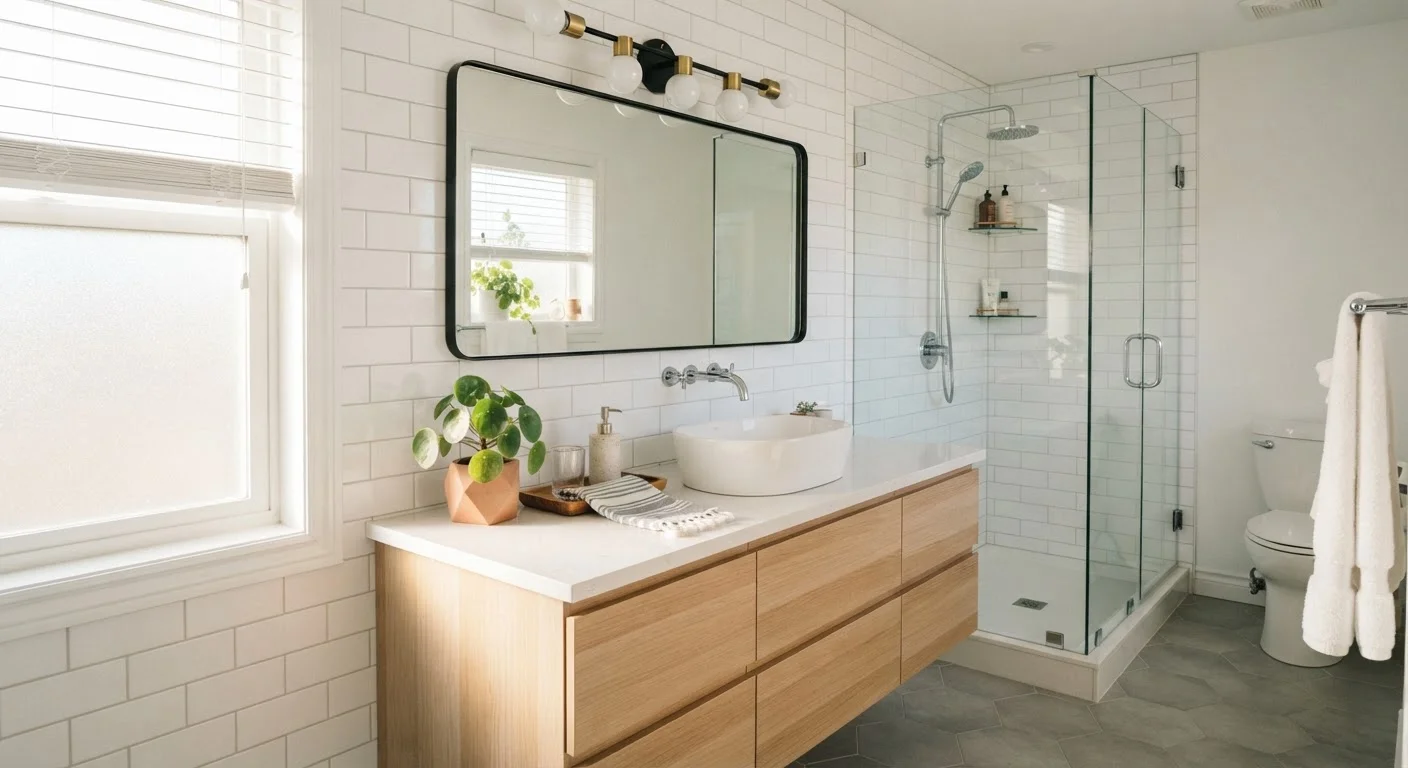
- Bathrooms with windows can support humidity-loving plants. Without natural light, plant choices become very limited - be realistic about what will survive.