Why Mixing Metals Works - When Done With Intention
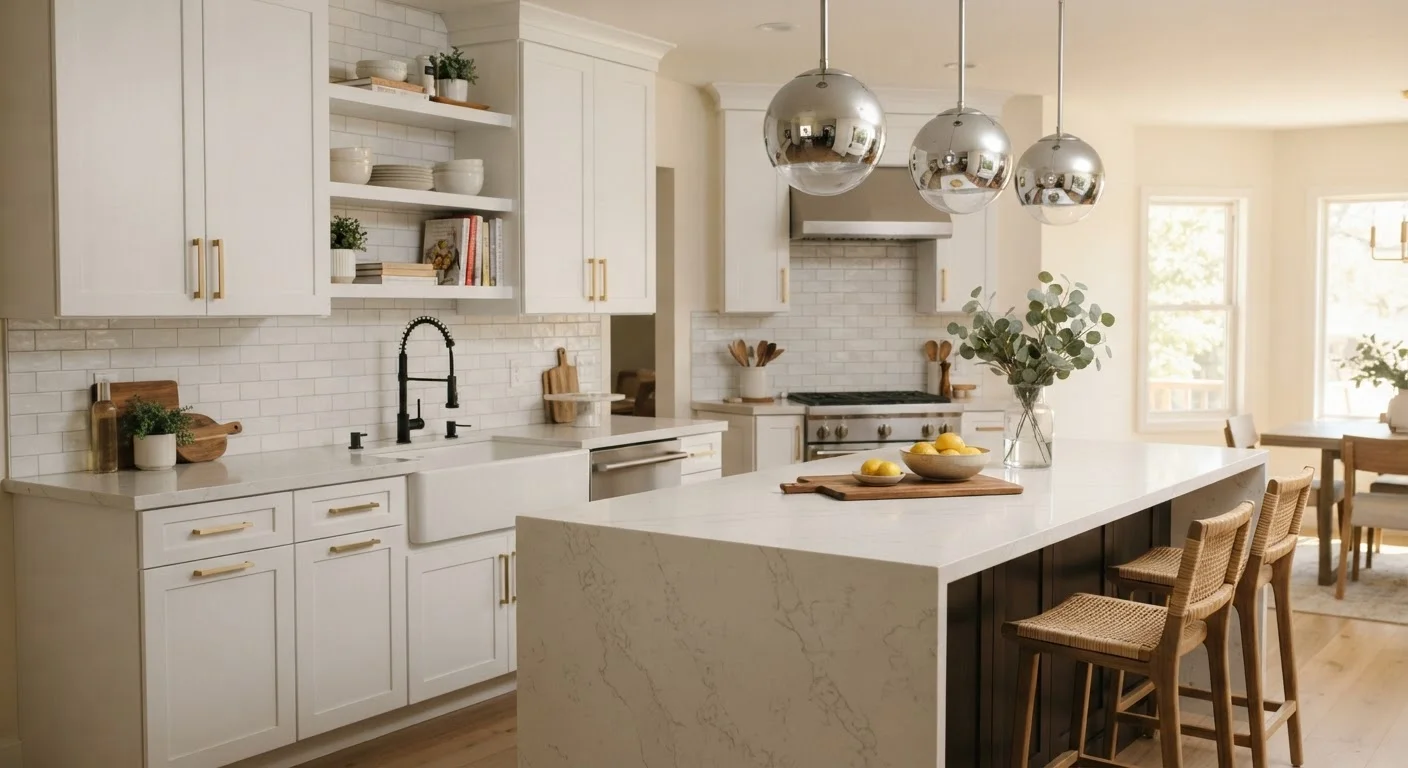
The old rule that all metals in a room must match has largely been set aside by designers and homeowners alike. Today, intentional mixing of finishes is widely regarded as a way to add visual depth and a curated, lived-in quality to a kitchen. The key word is intentional. Random combinations tend to look scattered; deliberate ones look designed.
If you're exploring how metal choices fit into your overall kitchen aesthetic, the kitchen design style you're working within will naturally shape which metals feel at home. A farmhouse kitchen lends itself to warm metals like brass and oil-rubbed bronze, while a minimalist space often suits cooler, quieter finishes like brushed nickel or matte black.
“Mixing metals is one of the most accessible ways to make a space feel layered and collected rather than catalog-perfect. The goal isn't randomness - it's controlled variety.”
— Emily Henderson, Interior designer and author known for approachable home styling guidance
The Core Principles for Mixing Metals Successfully
Successful metal mixing follows a few consistent principles that apply regardless of kitchen style or budget.
Establish one dominant metal finish before introducing any others.
A dominant finish anchors the space and gives the eye a clear reference point. Without one, multiple metals compete equally for attention and the result can feel restless rather than rich. Assigning roughly 60-70% of your metal presence to a single finish creates an underlying order.
Pair metals that share a similar temperature - warm with warm, or cool with cool.
Metal finishes carry distinct undertones. Gold, brass, and copper read as warm; chrome, silver, and brushed nickel read as cool. Combining metals from the same temperature family creates natural cohesion. Crossing temperatures - say, warm brass with cold chrome - requires a stronger design rationale to avoid clashing.
Vary metals by zone rather than scattering them throughout.
Assigning different finishes to distinct zones - hardware, plumbing fixtures, and overhead lighting - gives each metal a clear home in the space. This zoning strategy makes combinations feel deliberate because each finish 'belongs' to a specific function.
Consider finish texture alongside finish color when making combinations.
Two finishes can share a similar tone but read very differently depending on whether they're polished, brushed, or matte. Mixing textures within a temperature family - for example, polished brass with brushed brass - adds subtle depth without introducing visual conflict.
Limit the total number of distinct metal finishes to three or fewer.
More than three finishes in a single kitchen space tends to exceed the eye's ability to organize the visual information into a coherent pattern. Two is often ideal; three can work well when each finish occupies a clearly defined role.
Quick Wins You Can Apply Today
You don't need a full renovation to start mixing metals more intentionally. Small, low-commitment changes can test combinations before you invest in permanent fixtures.
For a fuller picture of how metals work alongside color, texture, and lighting, see what makes a kitchen feel cohesive.
Common Mistakes and How to Avoid Them
Even with good intentions, certain missteps make mixed metals look haphazard rather than considered.
When Metals Clash: What to Look For
A common sign that a metal combination isn't working is when your eye keeps moving between finishes without settling anywhere - a sense of low-level visual discomfort. This often happens when two finishes are too similar in tone but not identical, which the eye reads as an error rather than a choice. When in doubt, increase contrast between finishes (e.g., switch from two near-identical silvers to one brushed and one matte) or consolidate down to fewer metals overall.
One of the most frequent errors is mixing metals without accounting for the countertop's undertones. A warm-toned marble or butcher block naturally complements gold and brass, while cool-toned quartz or concrete tends to harmonize with chrome or brushed nickel. For more on how countertop materials carry their own visual personality, see what each countertop material brings to a room.
Another common mistake is treating every surface as an opportunity for a different metal. Restraint is a design tool. If you're unsure whether your plan is working, run through a pre-redecorating checklist before committing to purchases. And if you've been told metals must always match, that's one of many decorating myths worth reconsidering.
~60%
Homeowners who use two or more metal finishes
Interior design surveys consistently find that mixing at least two finishes has become standard practice in kitchen renovations across the US.
3
Maximum metal finishes most designers recommend
Design educators and practitioners widely cite three as the upper limit for metal finishes in a single room before visual cohesion becomes difficult to maintain.