What 'Local' and 'Cloud' Actually Mean in Smart Home Terms
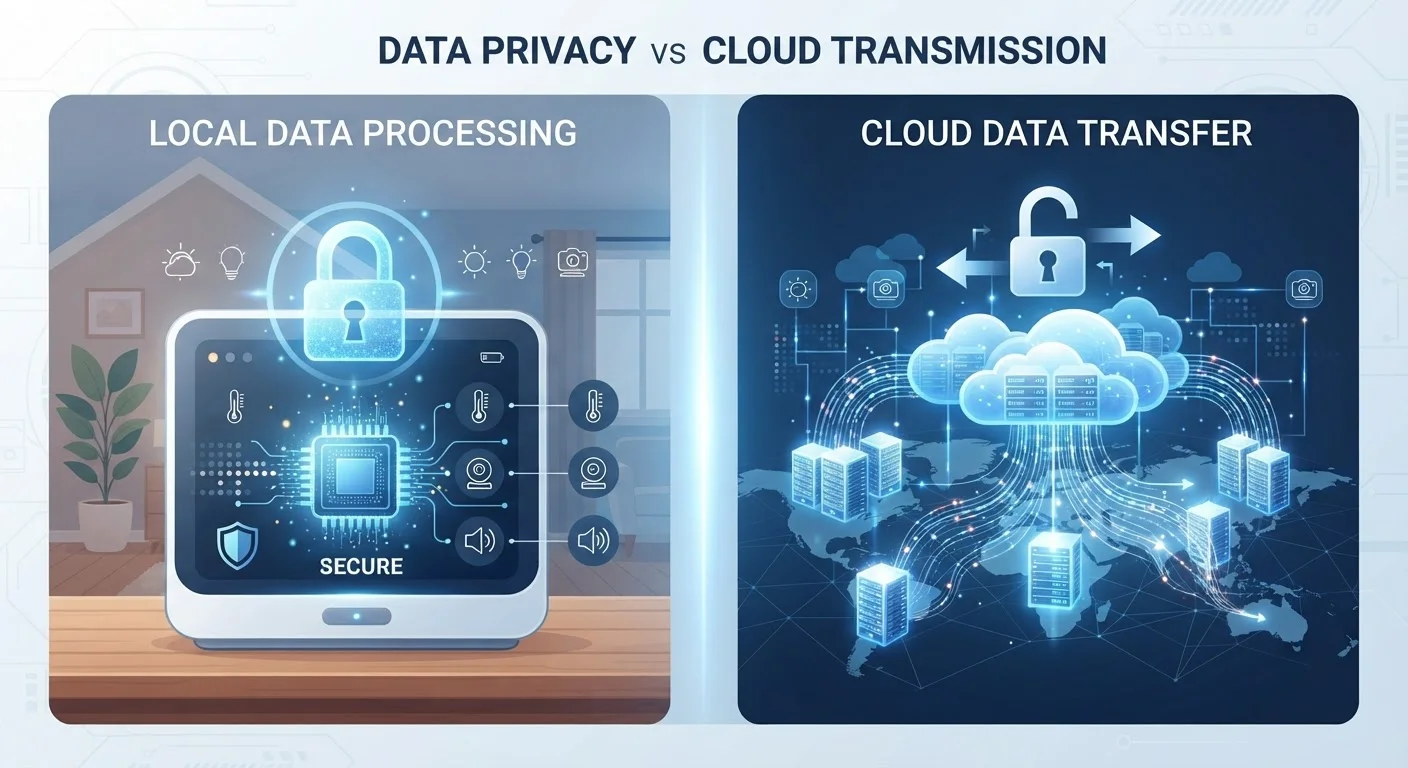
When a smart device says it uses local processing, it means the device's own hardware - a built-in chip - handles data analysis and decision-making without sending anything to a remote server. Your smart thermostat recognizing your schedule, or a security camera detecting motion: if those tasks happen locally, the data never leaves your home network.
Cloud-dependent devices work differently. When you speak a voice command or trigger a sensor, data travels over the internet to the manufacturer's remote servers, gets processed there, and a response is sent back. This round trip can happen in under a second - fast enough that most users never notice - but it means your data has left your home.
This distinction matters a great deal for privacy. For a deeper look at how network connections affect data exposure, see when Wi-Fi versus mobile data is the smarter choice. The same logic applies to smart home devices: the path your data travels determines who might have access to it.
| Criterion | Local Processing | Cloud-Dependent |
|---|---|---|
| Data destination | Stays on device or home network | Sent to remote servers |
| Privacy exposure | Lower - minimal third-party access | Higher - governed by company policy |
| Works without internet | Yes, typically | Often no, or limited function |
| AI and feature capability | Limited by on-device hardware | More powerful, continuously updated |
| Setup complexity | Can be more involved | Usually simpler out of the box |
| Software updates | Manual or less frequent | Automatic and continuous |
| Third-party data sharing risk | Low | Varies by provider policy |
Privacy Implications: Where Does Your Data Actually Go?
For cloud-dependent devices, your data typically lands on servers owned or operated by the device manufacturer or a partner company. That data may be stored, analyzed to improve the product, or - depending on the privacy policy - shared with third parties. This doesn't mean all cloud platforms are careless with your information, but it does mean you're trusting the company's security practices and data policies.
Local processing significantly narrows that exposure. Because data doesn't leave the device (or at least doesn't leave your home network), the attack surface is smaller. There's no server breach to worry about, no policy update that suddenly changes how your data is shared. Of course, local devices aren't immune to risk - a poorly secured home network can still expose them - but the threat model is meaningfully different.
It's worth reading actual privacy policies before purchasing any smart device. Common things to look for: whether the company sells or licenses data to advertisers, how long data is retained, and whether you can request deletion. For a reality check on common privacy assumptions, separating smart home privacy fact from fiction is a useful starting point.
69%
US adults who own a smart home device
According to Pew Research Center data, roughly 69% of US adults own at least one smart home device such as a voice assistant or smart TV.
1 in 3
Smart device owners concerned about data privacy
Pew Research Center surveys have found that approximately one in three smart device owners express concern about how their devices collect and use data.
Reliability and Features: The Real Trade-Off
Privacy isn't the only dimension that separates local and cloud-based devices - reliability and functionality differ substantially too.
Local devices generally keep working during internet outages. A locally processed smart lock or lighting system can still respond to commands even if your router loses its connection. Cloud-dependent devices, by contrast, often become unresponsive or revert to basic functionality when the internet goes down. If your household experiences frequent outages, this is a practical concern worth weighing.
On the features side, cloud processing has clear advantages. Remote servers can run far more complex AI models than a small on-device chip, which is why cloud-connected voice assistants tend to handle nuanced requests better, learn preferences over time, and receive continuous updates. Some smart cameras use cloud-based AI to distinguish between a person and a passing car - a task that strains most local processors.
This trade-off echoes a broader pattern in consumer tech. As explored in the real trade-offs of making your home smarter, convenience and capability often come at the cost of privacy and autonomy. Understanding which matters more to you is the starting point for any smart home decision.
What 'No Cloud Required' Labels Actually Mean
Some devices advertise local processing but still send certain data - like firmware update checks or usage analytics - to the manufacturer's servers. 'No cloud required' typically refers to core functionality, not every data interaction. Before purchasing, review the privacy policy to understand exactly what is and isn't transmitted, even on locally processed devices.
Making a Thoughtful Choice for Your Home
Neither approach is universally better. The right choice depends on what you value most and how you use your devices day to day.
If privacy control is your primary concern - particularly for sensitive areas like bedrooms or home offices - look for devices explicitly marketed as local-first or those that support open home automation platforms like Home Assistant, which allow for local processing without relying on a manufacturer's cloud. For smart security hardware specifically, understanding what connected locks, cameras, and sensors actually protect against provides helpful context on what these devices can and can't do.
If you want the most capable, feature-rich experience and are comfortable with the data sharing involved, cloud-dependent devices often deliver a noticeably smoother experience - especially for voice assistants and AI-driven automations.
Many households find value in a hybrid approach: local processing for cameras and security sensors in private spaces, cloud-connected devices for less sensitive applications like smart speakers in common areas. The key is knowing the difference so the choice is deliberate, not accidental.
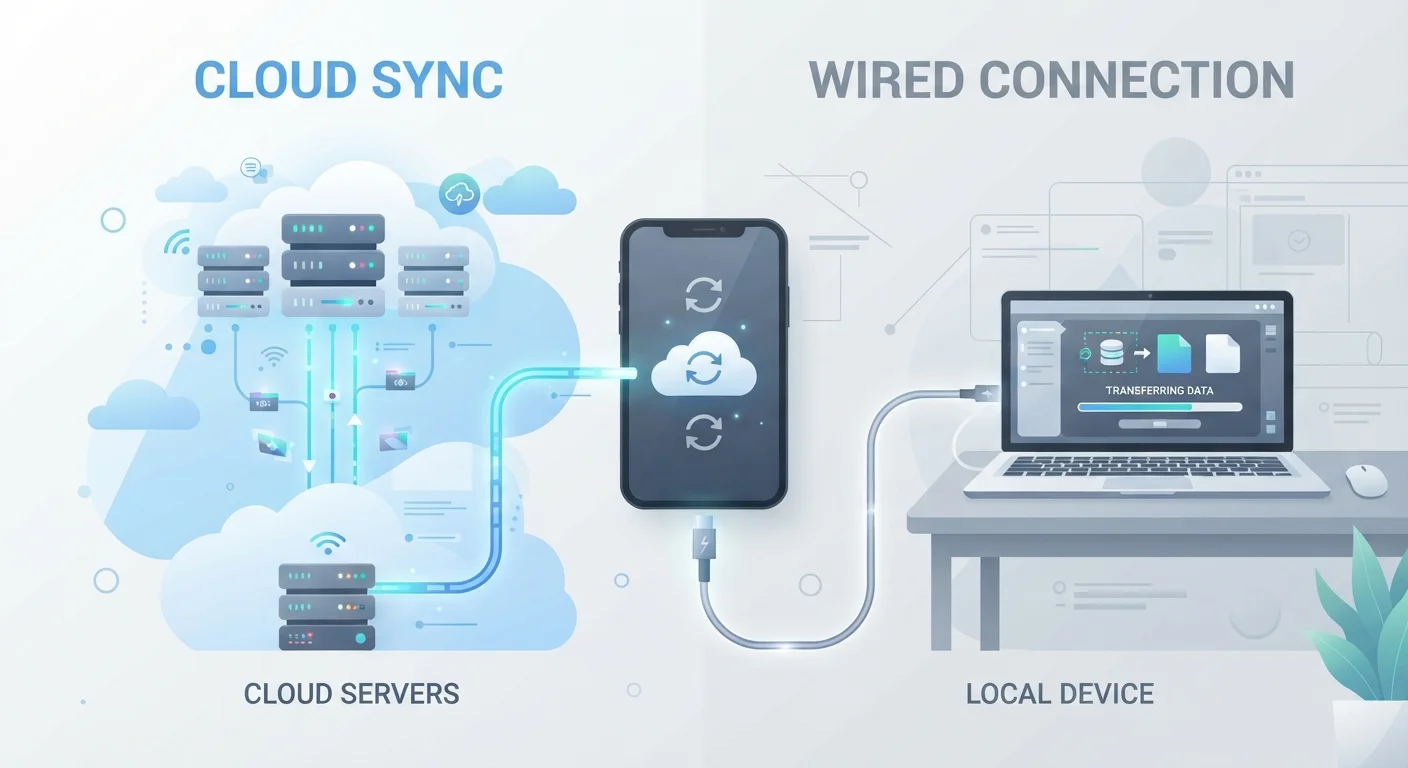
For further reading on how storage and data handling work in connected devices more broadly, the comparison of cloud backup vs. local backup for mobile devices applies similar principles to a familiar context.