Why Smart Home Technology Is Being Considered for Accessibility
For many people, the ability to live independently at home is a deeply personal priority. Smart home devices - voice assistants, automated lighting, smart locks, and remote monitoring tools - have opened new possibilities for reducing the physical and cognitive demands of daily life. Understanding how they work is a useful starting point; see our plain-language guide to smart home devices for a breakdown of what these technologies actually do.
This article takes a realistic look at both the genuine advantages and the real limitations of smart home tech for people with disabilities and older adults who want to remain in their own homes.
Voice control reduces need for physical interaction
People with limited mobility, tremors, or low vision can operate lights, locks, and appliances through voice commands alone, reducing dependence on physical switches or remote controls.
Automated routines ease cognitive burden
Scheduled tasks - such as medication reminders or lights turning on at dusk - can reduce the number of things a person needs to actively remember or initiate each day.
Remote check-ins support family peace of mind
Door sensors and motion monitors can give family members low-intrusion visibility into whether a loved one is active and safe, without requiring constant in-person visits.
Smart locks improve safety and access
Keypad or app-controlled locks eliminate the need to manage physical keys and allow caregivers or emergency contacts to enter a home remotely if needed.
Adjustable lighting can reduce fall risk
Motion-triggered or voice-activated lights in hallways and bathrooms can reduce the need to navigate in the dark, which is a leading factor in household falls among older adults.
Where Smart Home Technology Genuinely Helps
Several categories of smart home features map directly onto everyday accessibility challenges.
Hands-Free Control
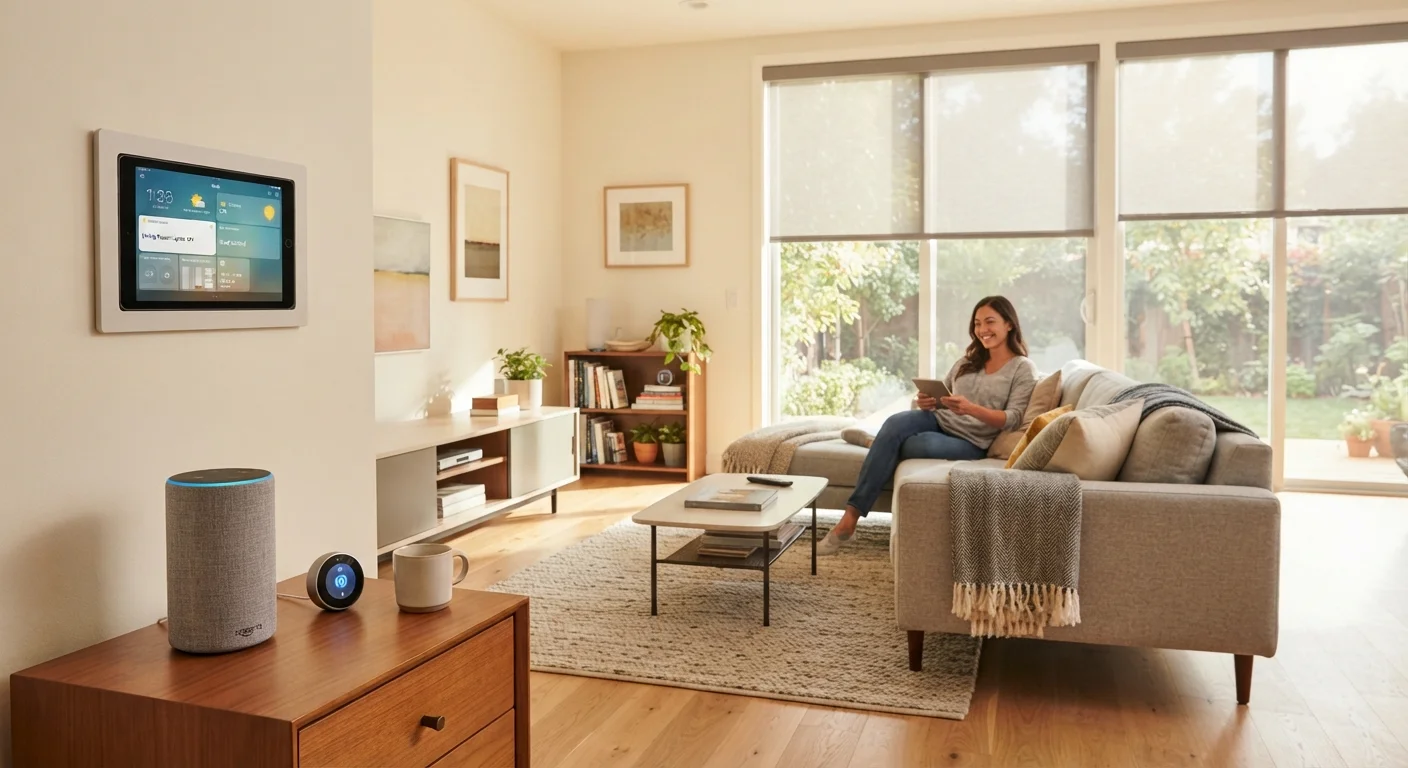
Voice assistants allow people with limited hand mobility, low vision, or conditions like arthritis to control lights, thermostats, and even door locks without touching a switch or keypad. For someone who struggles to move across a room safely, being able to say "turn off the kitchen light" is a practical, meaningful change.
Automated Routines
Scheduled automations - lights that turn on at dusk, medication reminders delivered through a speaker, or a door that locks at a set time - can reduce cognitive load for people managing memory challenges. These routines don't require someone to remember or initiate each action.
Remote Family Monitoring
Smart cameras, door sensors, and activity monitors can give family members visibility into whether a loved one is moving around normally, or whether something seems off - without being intrusive around the clock. This kind of passive check-in can provide peace of mind for both the person at home and those who care about them.
90%
Older adults who prefer to age in place
According to AARP survey data, approximately 9 in 10 adults over 65 express a preference to remain in their own homes as they age.
36M+
Adults in the US living with a disability
The CDC estimates that more than 1 in 4 US adults live with some form of disability, many of which affect mobility or daily living activities.
The Real Limitations You Should Know
No technology eliminates every barrier, and smart home devices come with a set of constraints that matter especially in accessibility contexts.
Reliability depends entirely on internet connectivity
If broadband service goes down - precisely when it might be needed most during a storm or emergency - many smart home functions become unavailable. This is a significant vulnerability for anyone depending on these tools for safety.
Setup complexity can be a real barrier
Configuring devices, connecting them to apps, and troubleshooting compatibility issues often requires comfort with technology that not all users have, and getting help from family or professionals may not always be feasible.
Not a substitute for emergency response systems
Smart devices are not designed or certified as medical alert or emergency response systems. A dedicated fall detection or emergency call device remains essential for situations requiring immediate help.
Voice recognition can struggle with some users
Accents, speech impairments, or low voice volume can reduce the accuracy of voice assistant commands, which is frustrating precisely for some of the users who stand to benefit most.
Privacy risks from always-on monitoring
Cameras and microphones that monitor activity at home collect sensitive data that can be exposed through security breaches or misuse. Users should understand what data is stored and by whom.
Upfront cost can be prohibitive
Building out even a modest smart home setup - smart bulbs, a voice assistant, a smart lock, and sensors - can run into hundreds of dollars before any professional installation costs are considered.
For a broader view of the trade-offs that apply to any smart home setup, the real trade-offs of making your home smarter covers what households gain - and give up - with connected devices.
Common Pitfalls Worth Anticipating
First-time users of smart home technology - regardless of age or ability - frequently run into setup surprises. Incompatible device ecosystems, unreliable Wi-Fi in certain rooms, and apps that change after software updates are among the most common. Our guide on things that catch new smart home owners off guard goes into detail on how to sidestep them.
Smart Devices Are Not Medical Alert Systems
Voice assistants and smart sensors are general-purpose tools - they are not certified fall detection or emergency response systems. For anyone with a significant fall risk or medical vulnerability, a dedicated personal emergency response device (worn on the body) provides a level of reliability that smart home tech currently cannot match. Smart home features can complement such a system, but should not replace it.
Planning a setup that actually holds up over time - rather than frustrating its user - takes some forethought. The principles covered in building a smart home that actually works are relevant here: reliability and simplicity should be prioritized over novelty, especially when someone depends on these devices daily.
Privacy Considerations in an Always-On Home
Smart home devices - especially those with microphones or cameras - raise legitimate privacy questions for anyone, but the stakes can feel higher when devices are monitoring a person's daily health and movement patterns at home. It's worth understanding what data these devices collect, where it goes, and who can access it. Our article on smart home privacy misconceptions separates fact from fiction on the most common concerns.
For family members helping set up remote monitoring, having an open conversation about consent and comfort level is important - technology should support autonomy, not undermine it.