What Each Device Actually Does
Both smart speakers and smart displays are voice-activated devices that connect to a smart home ecosystem - such as Amazon Alexa, Google Home, or Apple HomeKit - to let you control lights, thermostats, locks, and other compatible devices with spoken commands. If you're new to how these ecosystems differ, our comparison of major smart home platforms breaks down the key distinctions.
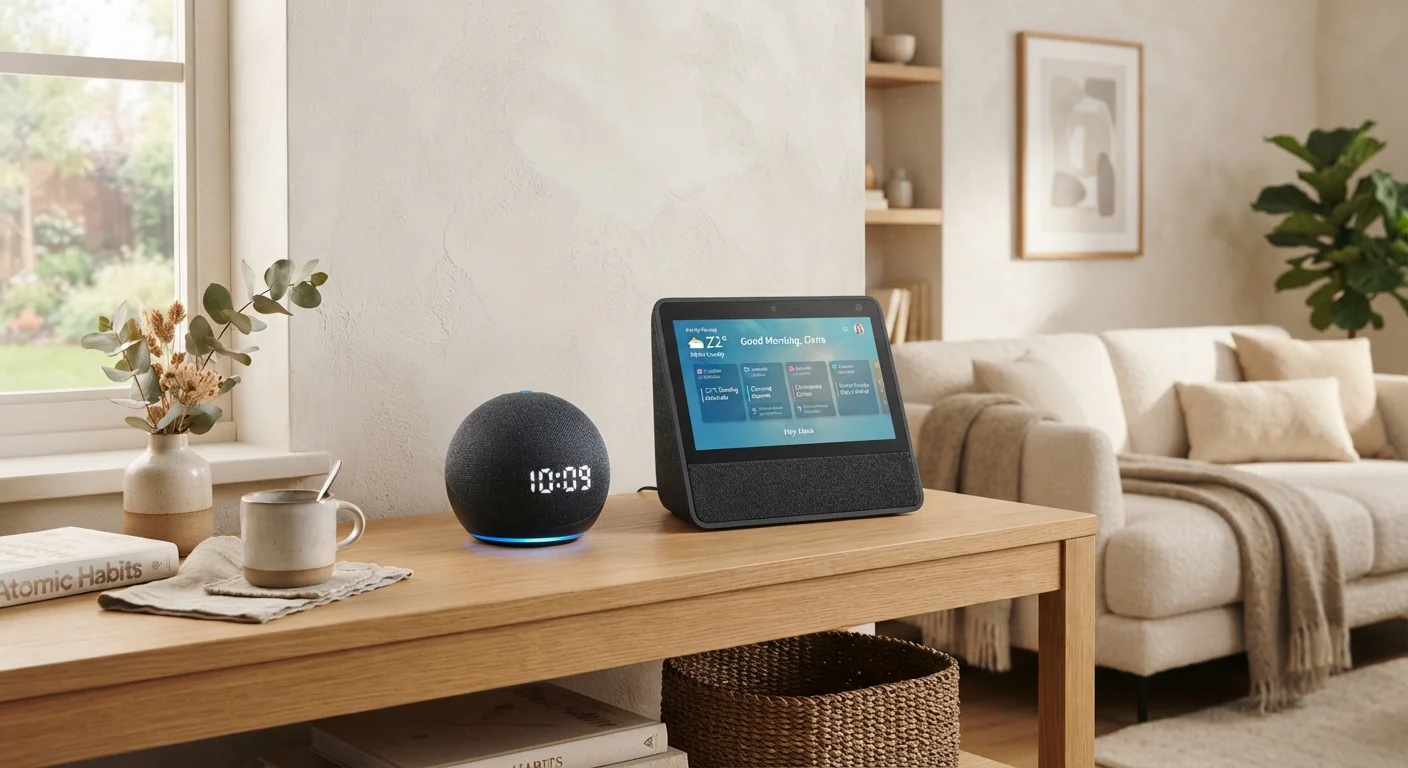
The core difference is the screen. A smart speaker is an audio device: it listens for your voice, responds verbally, and plays music, podcasts, or audio briefings. There's nothing to look at - all feedback is spoken. A smart display does everything a smart speaker does, but adds a touchscreen that shows visual responses: weather forecasts, timers with countdowns, video call participants, recipe steps, and smart camera footage.
For a broader look at how both device types fit into connected homes, see our Smart Home 101 guide.
| Criterion | Smart Speaker | Smart Display |
|---|---|---|
| Screen | None - audio only | Touchscreen included |
| Voice control | Yes | Yes |
| Video calling | Audio only | Full video and audio |
| Camera feed viewing | Not supported | Supported on screen |
| Typical footprint | Small to compact | Medium to large |
| General price range | Lower | Higher |
| Audio quality focus | Often prioritized | Secondary to display |
| Recipe / visual guides | Verbal steps only | On-screen step-by-step |
Where Smart Speakers Have the Edge
Smart speakers shine in scenarios where audio is the point and visual feedback would add clutter rather than convenience. Their smaller footprint means they tuck neatly onto a nightstand, bookshelf, or small kitchen counter without dominating the space. Because they don't require display technology, they tend to cost less for comparable voice-assistant performance.
Audio quality is another consideration. Some smart speakers are engineered specifically around sound - with tuned drivers, woofers, and room-filling output - making them genuinely capable music devices in addition to home hubs. If high-quality audio is a priority for you, a dedicated smart speaker often delivers better sound per dollar than a smart display of similar price.
35%+
US households with at least one smart speaker
Industry research from NPR and Edison Research has tracked smart speaker adoption in US homes at or above this level in recent years.
#1
Most common smart speaker use: music playback
Surveys of smart speaker owners consistently find music listening as the most frequent daily use case, ahead of timers, weather, and smart home control.
For households where smart home interactions are mostly routine - turning lights on and off, checking the weather, setting timers, or playing a playlist - a smart speaker handles every task without requiring anyone to walk over and look at a screen.
Where Smart Displays Pull Ahead
The screen unlocks a genuinely different category of usefulness. Video calling is the most cited reason people upgrade from a speaker to a display: being able to see and speak with family hands-free while cooking or folding laundry is a meaningful quality-of-life improvement. Visual timers, on-screen calendar reminders, and photo slideshows also make the display feel like a shared household tool rather than just a voice gadget.
Smart displays also serve as visual control panels. Rather than speaking a specific command you might not remember, you can tap through device controls on the screen - useful when onboarding new household members or guests unfamiliar with voice commands. Viewing a doorbell camera or baby monitor feed directly on the display is another advantage speakers simply cannot offer.
A Note on Always-On Microphones and Cameras
Both smart speakers and smart displays include always-on microphones that listen for a wake word. Smart displays with cameras add another layer to consider. Most major platforms allow you to mute the microphone or physically cover or disable the camera. Reviewing the privacy settings of any device you bring home is a straightforward step worth taking before setup.
It's worth noting that adding any always-on connected screen to your home does raise data and privacy considerations. Our article debunking smart home privacy myths clarifies what these devices actually collect and how to manage those settings.
Choosing Based on Your Daily Routines
The practical question isn't which device is objectively better - it's which one matches how your household actually moves through the day. Ask yourself: Do you frequently cook from recipes and want hands-free step-by-step guidance on a screen? Do you video call relatives regularly? Do multiple people in your home need a shared visual dashboard for schedules and reminders? If yes to any of these, a smart display is likely worth the extra investment.
If your needs are simpler - music, timers, voice commands for smart home devices, and occasional news or weather - a smart speaker delivers that reliably and at lower cost. You can always weigh the broader trade-offs of smart home tech before committing to either device type.
One practical approach: start with a smart speaker in the room where you spend the most time. If you find yourself wishing you could see information rather than just hear it - especially in the kitchen - that's a reliable signal that a display would serve you better in that space. Many households end up with one of each, placing a speaker in a bedroom and a display in the kitchen or living room. Understanding the terminology behind smart home devices can also help you compare options more confidently before purchasing.